
- Hire a Developer
 Android Developers
  iOS Developers
  Angular Developers
  DevOps Developers
  Laravel Developers
  MEAN Stack Developers
  MERN Stack Developers
  NestJS Developers
  NodeJS Developers
  NextJS Developers
  NuxtJS Developers
  Python Developers
  ReactJS Developers
  VueJS Developers
  WordPress Developers
  Shopify Developers
  BigCommerce Developers
  Salesforce Developers
 - AI Development
- Industries










Get in Touch


How Do Legal Document Automation Platforms Work?
Legal teams often lose time in repeat drafting review cycles and approval delays. A smart legal document automation platform brings all document tasks into one structured flow. It uses pre-approved templates to create documents faster and keeps clause selection aligned with business rules. It also supports guided inputs for teams to generate the right file with less manual work.
The platform improves control across every stage of the process. It routes documents for review and keeps approvals clear. Teams manage document generation with better consistency and stronger visibility. This helps businesses reduce routine effort and handle legal work effectively.
Business Value of Legal Document Automation Platform Development
Legal teams need more than faster drafting. They need a system to improve control across the full document process. Legal document workflow automation helps businesses handle work with structure and less delay. This creates a reliable process for teams to manage important legal records.
Faster Turnaround
Accelerated workflows help documents move through drafting and review with less delay. Teams complete routine tasks in less time and respond to business needs. This improves day to day productivity across legal operations.
Key Capabilities
- Speeds up drafting and review cycles
- Reduces delays in internal approvals
- Helps teams respond faster to requests
- Improves daily workflow efficiency
Better Consistency
Standardized processes keep document structure and review paths aligned across the business. This helps teams avoid variation in repeated legal tasks. Custom legal software development improves trust in the final output.
Key Capabilities
- Maintains approved language across documents
- Reduces variation in routine drafting
- Supports consistent legal review paths
- Improves quality across recurring tasks
Lower Manual Effort
Automated steps reduce the need for repeated data entry and follow-ups. Teams spend less time on routine work. This helps them focus more on tasks that require legal judgment. It supports better use of internal resources.
Key Capabilities
- Reduces repetitive drafting work
- Cuts manual checks across workflows
- Limits time spent on follow ups
- Frees teams for higher value work
Improved Visibility
Clear workflow tracking helps teams see where each document stands and what action comes next. This reduces confusion during review and makes progress easier. Better visibility supports stronger coordination across divisions.
Key Capabilities
- Shows document status at each stage
- Clarifies pending actions and ownership
- Reduces confusion during review cycles
- Supports smoother team coordination
Stronger Governance
Defined controls help businesses manage approvals and document history with trust. This creates a secure and accountable legal process. Custom contract automation platform development supports internal standards across teams.
Key Capabilities
- Strengthens approval control across workflows
- Supports secure access to legal files
- Maintains document history with clarity
- Improves accountability in legal operations
Scalable Operations
Structured automation helps businesses handle documents without adding the same level of manual effort. This makes it easier to support growth across legal teams and business functions. A scalable platform maintains quality as demand grows.
Key Capabilities
- Supports growing document volumes
- Reduces pressure on legal teams
- Maintains quality during expansion
- Helps operations scale with control

Slow Drafting Cycles
Manual drafting takes time because teams often start with older files and repeated edits. This slows document turnaround and makes urgent requests harder to manage. Legal document automation platform enhances efficiency across legal operations.

Outdated Clause
Legal teams may reuse language from past documents that no longer fit current needs. This creates inconsistency across contracts and increases the risk of using outdated terms. Better control is needed to keep legal content aligned and current.

Approval Delays
Reviews often move slowly when approvals depend on emails and manual follow-ups. This creates uncertainty around ownership and next steps. Legal document automation platform development streamlines the process, leading to faster approvals.

Version Confusion
Multiple drafts create confusion when teams work across separate files and disconnected systems. It becomes harder to identify the latest version or track what changed during review. Custom legal software development assists to reduce errors.

1

2

3

4

5

6

7

8
Turn Legal Bottlenecks Into Fast Workflows
Build a legal document automation platform to keep operations moving forward. Stop losing time on legal drafting.
Integrations To Connect Legal Workflows Across Systems
A legal document automation platform works best when it connects with the systems a business already uses. Strong integrations help teams move data and approvals without switching between disconnected tools. This creates a smoother workflow and reduces delays across legal operations.


CRM Integration
Connected customer relationship management systems keep client and matter details aligned with legal document workflows. It enables teams to pull the right information into templates without repeated manual entry. This improves accuracy and helps documents move faster.

Document Storage Integration
Linked storage systems keep files organized and easy to access across the document lifecycle. Teams, save, retrieve, and manage legal records in one connected environment. This supports better control over file handling and long-term record management.

E-Signature Integration
Built-in signature tools help businesses complete agreements without slowing down the process. AI legal document automation helps to move from drafting to signing in a more direct and secure flow. This improves turnaround time and makes approvals easier to manage.

Approval System Integration
Connected approval tools help legal teams route documents through the right review path. This reduces confusion in the process and keeps every stage of the process visible. A more unified system also helps businesses maintain stronger oversight and seamless workflow.

ERP Integration
Enterprise resource planning systems connect legal workflows with finance and vendor data. This helps businesses keep document processes aligned with active tasks. AI software development services ensure better data flow and reduce repeated work across departments.

CMS Integration
Integrated case tools help legal teams manage documents alongside matter deadlines and related activities. This creates a more complete view of each legal process. A secure legal document automation solution helps teams work with coordination and fewer gaps in data.
Why Businesses Choose Teqnovos for Platform Development
Choosing the right development partner matters when legal workflows demand accuracy and flexibility. Teqnovos focuses on building platforms to solve real business challenges and support structured document processes.
Build platforms around specific legal workflows
Shape features to match business goals
Support complex document processes with clarity
Create solutions that fit real user needs
Focus on long-term product value
Add intelligent features to legal workflows
Support smart drafting and document review
Improve search summarization and data handling
Align AI features with business use cases
Build practical automation into the platform
Design systems for future business growth
Support increasing document volume with ease
Maintain performance across connected workflows
Build a stable foundation for expansion
Keep the platform ready for new features
Align platform planning with operational goals
Solve real workflow challenges with precision
Keep the product useful for daily teams
Improve legal processes through clear structure
Support measurable value across operations
Upgrade Legal Processes Before They Slow Growth
The right platform changes how documents move across the business. Build tools for better document control and fewer delays.
How AI Improves Legal Document Workflows
AI-powered legal document automation software improves processes with precision and control. It helps teams reduce repetitive work and handle document tasks with consistency. This creates a more efficient path across document creation and approval.

Intelligent Clause Suggestions
Smart suggestions help teams choose suitable clauses based on document type and user input. This reduces drafting time and keeps language aligned with approved standards. It also supports better consistency across repeated workflows.
Why choose this solution?
- Recommends suitable clauses for each document type
- Reduces time spent reviewing standard language
- Supports approved wording across legal documents
- Improves consistency in recurring document tasks

Quick Document Summarization
Concise summaries help users understand long legal documents in less time. This makes reviews easier and helps teams focus on key terms and critical details. Faster insight leads to improved visibility and efficient document handling.
Why choose this solution?
- Highlights important terms and legal obligations
- Saves time during document review
- Improves visibility into lengthy legal content
- Helps teams focus on critical details faster

Accurate Data Extraction
Automated extraction pulls important details such as names and obligations from legal files. This reduces manual entry and improves document accuracy across connected workflows. It also helps teams process records with efficiency.
Why choose this solution?
- Captures key data from legal documents
- Reduces manual entry across workflows
- Improves accuracy in document processing
- Speeds up record handling for legal teams

Early Risk Flagging
Built-in risk checks to identify missing clauses or approval gaps during the review process. This helps teams address issues sooner and maintain stronger control over legal quality. Early visibility supports confident decision-making.
Why choose this solution?
- Detects missing clauses during review
- Highlights unusual wording for closer checks
- Identifies approval gaps in the workflow
- Supports better quality control across documents

Smart Document Search
Intelligent search helps users find document clauses and key information without scanning large file sets manually. This improves access to legal content and saves time across operations. Faster retrieval helps strengthen workflow.
Why choose this solution?
- Finds files and clauses in less time
- Improves access to stored legal content
- Reduces manual searching across records
- Supports faster daily legal operations

Guided Review Support
Assisted review features help teams move through document checks with structure and less manual effort. This improves review quality and helps users focus on sections that need attention. Better support leads to reliable workflows.
Why choose this solution?
- Guides users through review steps
- Reduces effort in routine checks
- Improves accuracy during document review
- Keeps legal workflows more structured
How Legal Automation Software Development Protects Documents
Legal document generation software platforms handle sensitive business data at every stage. Strong security controls help protect documents and workflows without slowing down daily operations. A reliable platform should support secure access and full visibility across document activity. This helps businesses maintain control while keeping legal work organized and protected.
Role-Based Permissions
Defined user permissions help control who can view, approve, or manage legal documents. Each user gets access based on responsibility and business need. This reduces unwanted exposure and keeps sensitive actions limited to the right people.
Encrypted Storage
Protected storage keeps legal records secure while they move through the platform after they are saved. Encryption helps safeguard important data against unauthorized access. This adds another layer of protection across the document lifecycle.
Audit Logs
Detailed audit logs record actions taken across the system. They help teams track who opened and updated the doc. It also helps view who reviewed and approved the file. This creates stronger accountability and supports better working oversight.
Controlled Approvals
Structured approval controls help businesses define who reviews and signs off on each document. This keeps the process clear and prevents files from moving forward without the right checks. Strong approval logic improves trust in the final output.
Document History
Complete document history keeps every revision visible and easy to trace. Teams can review past changes and confirm the latest approved file. Custom legal software development helps reduce confusion and supports better record control of the files.
Secure Access
Centralized access management helps businesses monitor user activity and adjust permissions as teams change. It supports a secure environment for legal operations and lowers the risk of unauthorized entry. This makes user control easier to maintain.
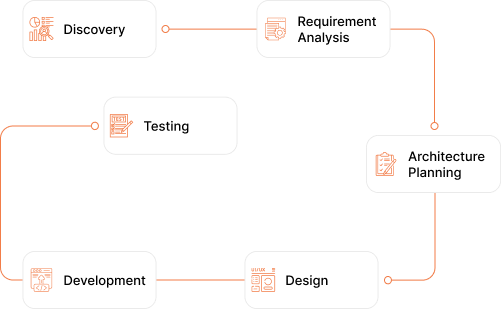
Discovery
The process begins with a close review of business needs and current document goals. This stage helps define what the platform must solve and which users it needs to support. Clear discovery creates a stronger base for the full project.
Requirement Analysis
Detailed requirements shape the scope of the platform and guide feature planning. This includes document types and approval logic. It also includes user role access needs and integration points. A defined scope helps project move clearly.
Architecture Planning
A scalable architecture supports secure performance across legal workflows and connected systems. This stage defines how the platform should handle data logic and future growth. Strong planning helps avoid issues later in development.
Design
Thoughtful legal document workflow automation design turns workflow needs into a clear user experience. Each screen form and action makes document tasks easier to manage. Good design helps teams use the platform with less training.
Development
This stage brings the platform to life through feature implementation and system integrations. The goal is to build a solution to support legal operations with speed and control. Each feature reflects the needs defined during planning.
Testing
Thorough testing helps confirm the platform works as expected across document creation and connected tools. This stage helps identify gaps before launch and improves overall reliability. Careful testing supports a smoother experience.
Deployment
A planned launch helps the platform move into live use with less disruption. AI legal document automation deployment includes environment setup, access control, and final system checks. This helps teams start using the platform with ease.
Optimization
Ongoing improvement keeps the platform aligned with changing legal needs and business growth. Performance reviews and workflow updates help strengthen the solution over time. Continuous optimization supports better operational results.
What makes Teqnovos different
Scalable Digital Solutions To Power Business Growth
Business success is our benchmark. At Teqnovos, we design and develop custom mobile applications that solve real operational challenges. Our solutions enhance customer experiences and support long-term scalability. By aligning technology with your workflows and market needs, we ensure every solution delivers lasting value.
About Teqnovos
Teqnovos’ team provides custom mobile app solutions to gain a competitive advantage in a growing market. Digital readiness helps businesses build loyalty and scale sustainably. Businesses are moving toward digital experiences that support convenience and speed. Mobile app development plays a key role in meeting these expectations. A well-planned app helps improve customer engagement and repeat purchases. It also gives businesses better control over branding, operations, and data. Book a free consultation with us to become a powerful growth channel in the market.

Frequently Asked Questions
Yes. The platform uses approved clause libraries and logic rules to generate the right content based on user input. This helps teams maintain consistency across contracts and other legal files.
A well-planned platform route documents to the right reviewers in the right sequence. It also shows pending actions and the document stage in one place. This helps teams reduce back and forth and move documents forward with better control.
A custom legal software development connects with business systems to support document workflows. These integrations help reduce manual entry and keep workflows connected.
Yes. Access rules can be set based on role or responsibility. This helps control who can view or manage each document type. Legal document generation software supports stronger security across sensitive legal workflows.
AI legal document automation supports tasks such as document summarization and risk flagging. These features help legal teams reduce manual effort and review documents more quickly.
The platform supports workflows such as contract drafting and compliance documents. The exact workflow depends on business needs and document volume.
A legal document automation platform allows for matching internal rules and integration needs. This is useful for businesses that cannot rely on rigid off-the-shelf tools or have complex legal operations.
A strong solution maintains version history and action tracking across the full document lifecycle. This improves visibility and helps teams review changes with confidence.
Teqnovos builds custom software solutions with expertise across AI-powered applications, web platforms, and business-focused product development. This makes it a strong fit for businesses that need a legal platform tailored to their workflows and growth plans.
Teqnovos offers AI software development services and positions its work around business-centric AI solutions. Our solutions are suitable for platforms that need features such as smart document review or workflow intelligence.
Teqnovos offers dedicated developers and flexible engagement models for custom software projects. This can help businesses build a legal automation platform with a team aligned to their project scope and technical needs.