- Hire a Developer
 Android Developers
  iOS Developers
  Angular Developers
  DevOps Developers
  Laravel Developers
  MEAN Stack Developers
  MERN Stack Developers
  NestJS Developers
  NodeJS Developers
  NextJS Developers
  NuxtJS Developers
  Python Developers
  ReactJS Developers
  VueJS Developers
  WordPress Developers
  Shopify Developers
  BigCommerce Developers
  Salesforce Developers
 - AI Development
- Industries











Get in Touch

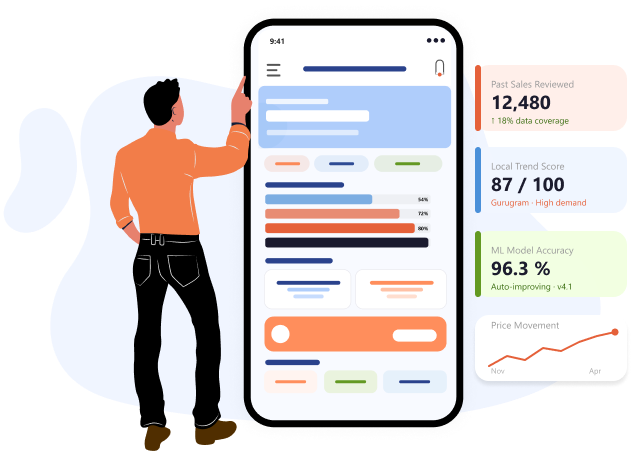
How AI Property Price Prediction Improves Estimation
AI helps software study real estate data and spot pricing patterns with speed. In property valuation, the system reviews past sales and local trends. It analyzes the property features and market activity for real estate price forecasting. This gives businesses a clear view of price movement and supports faster decisions across property platforms.
Machine learning allows software to learn through data and improve prediction quality over time. Businesses use this solution to reduce manual work and improve pricing accuracy. Property valuation automation turns raw property data into useful insight to support better planning and stronger decisions.
How AI-Powered Property Price Prediction Software Development Works
This solution helps businesses estimate property value with speed and clarity. It uses real estate data to study pricing patterns and generate useful predictions. Each stage supports better valuation logic and reduces dependence on slow manual review. The result is a smarter system to help teams act with confidence.
Data Collection
The agent begins by gathering property data from trusted sources. It studies past sales records and market movement. This stage builds the base for accurate price estimation and helps businesses work with stronger input quality.
Key Features:
- Collects data from trusted property sources
- Reviews sale history and market activity
- Captures key property attributes
- Builds a stronger base for prediction
Data Cleaning
Raw property data often contains gaps or repeated values. The system refines this data before analysis so the model can work with better quality inputs. This improves consistency and supports more dependable prediction results.
Key Features:
- Removes duplicate or weak records
- Improves the quality of input data
- Organizes data for model use
- Supports cleaner valuation logic
Pattern Learning
The system studies the collected data to identify pricing patterns. It learns how factors such as area demand size and type affect value. This stage helps the model create a logic to support reliable predictions across segments.
Key Features:
- Detects value patterns across locations
- Learns links between features and price
- Improves prediction logic over time
- Supports more reliable estimation output
Model Testing
The system checks the trained model against existing pricing records to measure accuracy. This stage helps identify gaps and refine the logic before live use. It gives businesses more confidence in the final prediction quality.
Key Features:
- Test results against real property data
- Measures model accuracy levels
- Refines gaps in prediction logic
- Strengthens trust in outcomes
Price Prediction
Once the model is trained, the predictive analytics real estate reviews inputs and generate an estimated price. It compares details with learned data patterns to deliver results. This gives businesses access to pricing insight.
Key Features:
- Generates value estimates in less time
- Uses current inputs for prediction
- Reduces manual pricing effort
- Delivers clear pricing insight
Insight Delivery
The machine learning property prediction presents results in a format for teams to use. It shows predicted value trend signals and supporting data points through dashboards. This helps businesses understand the output and act.
Key Features:
- Displays results in a usable format.
- Highlights patterns behind predictions
- Supports easier business decisions
- Improves visibility across teams

Slow Manual Processes
Traditional property valuation often takes too much time. Teams compare nearby sales and study the market movements. This slows the process and creates delays during the pricing. AI real estate analytics reduces this manual process and generates estimates faster.

Inconsistent Data Sources
Data often varies across platforms and records. This makes it harder to reach a clear price estimate. When businesses use incomplete or outdated details, the final value loses accuracy. An AI software development company to predict price offers better insights.

Subjective Judgement
Human judgment creates another challenge. Different evaluators may assess the same property in different ways. This leads to inconsistent pricing and reduces trust in the final estimate. Build AI property valuation model to produce balanced and consistent estimates.

Limited Market Visibility
Most manual methods fail to capture live market shifts as they happen. Businesses may end up working with estimates that no longer reflect current demand. Create a software to predict property prices to estimate and capture the market demands faster.

1

2

3

4

5

6

7

8
Still Pricing Properties the Hard Way?
Build an AI-based property price prediction system to improve valuation speed and support better planning. Turn your property data into real business value
Benefits of AI-Powered Property Price Prediction Platform Development
A property price prediction model helps businesses improve how they estimate value and respond to market movement. It supports faster workflows and better business planning. This kind of pricing system also supports AI workflow automation by reducing manual review and improving decision speed.
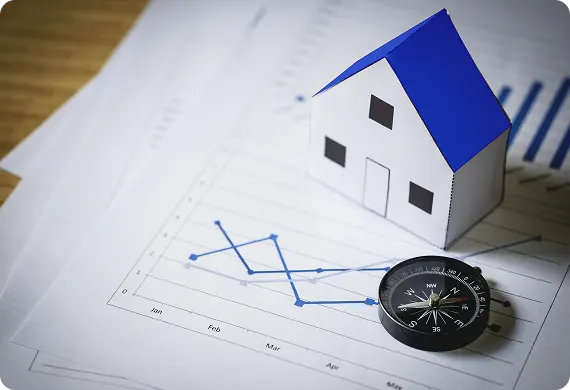

Faster Decision-Making
AI real estate analytics prediction helps businesses review property value in less time. It reduces long manual checks and gives teams quicker access to pricing insight. This supports faster action across business investments and planning tasks.

Improved Pricing Accuracy
Stronger data analysis helps the system produce reliable value estimates. An AI software development company to predict price studies property features and location signals to support better pricing logic. This improves the final estimate.

Lower Risk Exposure
Clearer value insight helps businesses make informed decisions. Property valuation automation supports better planning and reduces errors linked to outdated records or weak assumptions. This lower risk during investment valuation processes.

Scalable Business Insight
The solution processes large sets of property data across different markets and property types. This helps businesses handle growing demand without slowing workflows. It supports expansion into larger platforms and broader pricing operations.

Stronger Market Position
Businesses using machine learning property prediction respond to market change with speed and clarity. This creates a better experience for users and supports smarter product value. It helps brands stand out through advanced capabilities.
Why Choose Teqnovos For AI Property Price Prediction Agent Development
Turn complex product ideas into practical digital solutions. Teqnovos focuses on business goals and user needs. As a software development company, we build products with clear processes to support quality and future growth.
Builds solutions around specific business goals
Aligns features with real user needs
Supports custom workflows and use cases
Focuses on long-term product value
Creates architecture that supports future growth
Handles rising data and user demand
Keeps performance stable across expansion
Supports smooth product evolution
Provides access to focused development talent
Supports clear communication across stages
Maintains speed through structured execution
Helps move projects forward with consistency
Applies practical expertise in AI development
Builds intelligent systems for real business use
Supports data-led product functionality
Helps turn complex ideas into usable solutions
The Future Of Real Estate Price Forecasting Starts Here
Transform real estate data into reliable price prediction with a solution shaped around business goals. Create a software to predict property prices to power your next move!
Technologies Used In AI Property Price Prediction Agent Development
Real estate prediction software development solutions use a focused set of technologies to support intelligent pricing. Each layer serves a clear purpose in the product. Some technologies help the system learn. Others support integration and live performance. Together, they help businesses build a reliable and scalable prediction solution.

Artificial Intelligence
Offers the platform offers the ability to make decisions. It helps the system study large sets of property data and identify value-related patterns. This makes the product capable of handling pricing tasks that need manual review. It also helps businesses use software in a strategic way.
Why choose this solution?
- Powers intelligent pricing logic
- Studies large property data sets
- Supports automated value estimation
- Reduces manual analysis effort

Machine Learning
The system learns through past property records and pricing outcomes. It improves the model by finding relationships between data points and the estimated value. This allows solutions to produce better results as data becomes available. It supports pricing consistency across different types.
Why choose this solution?
- Learns through past pricing data
- Improves results over time
- Finds patterns in property records
- Supports consistent valuation output

Python
Supports the main development layer of the solution. It helps teams build workflows to manage model tasks and process large sets of data with ease. It also works well for backend functions linked to pricing systems. This makes it a practical choice for building real estate products.
Why choose this solution?
- Supports core product development
- Handles data-related workflows
- Works well for backend tasks
- Fits real estate software products

TensorFlow
Trains the predictive analytics real estate model used in the solution. It allows the system to study data patterns and improve how it estimates value. This strengthens the learning process and supports dependable model performance. It helps to build solutions to grow with business needs.
Why choose this solution?
- Trains the prediction model
- Improves pattern recognition
- Supports dependable model output
- Helps scale product performance

Cloud APIs
Connect the solution with external services and business platforms. They help the system receive property records and send prediction results where needed. This keeps the product connected and easier to use across different environments. It supports smooth feature expansion over time.
Why choose this solution?
- Connects with external services
- Supports smooth data exchange
- Delivers outputs to other platforms
- Improves product connectivity
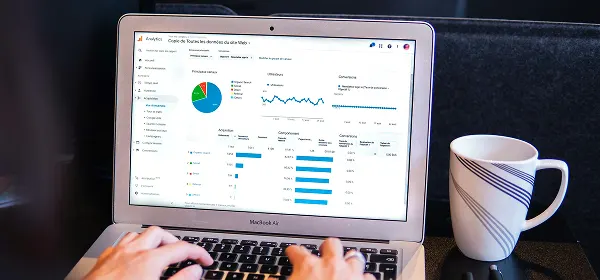
Data Processing Tools
Data processing tools prepare raw property records before the model uses them. They help clean, sort, and organize information so the system works with better quality input. This improves model readiness and supports pricing results. It helps reduce data gaps that weaken performance.
Why choose this solution?
- Cleans raw property data
- Organizes records for model use
- Improves input quality
- Reduces data-related issues
AI Property Valuation Software Use Cases Across Industries
This solution supports a wide range of business models that depend on fast and reliable property value estimation. Machine learning property prediction helps teams turn market data into useful pricing insight for different goals. Each use case shows how intelligent prediction improves planning and reduces efforts.
Real Estate Platforms
Digital property platforms use this solution to improve how users explore estimated value across listings. It helps present pricing insight with consistency and supports a better search experience. Clear value estimates also increase trust and engagement.
Property Listing Portals
Property portals add more depth to every listing through intelligent price estimation. The system studies location traits and market signals to produce useful value insight. Many listing businesses now invest in SaaS real estate software to improve property discovery and usability.
Investment Firms
Investment-focused businesses use this solution to study pricing movement before making asset decisions. It helps identify value opportunities and supports stronger planning through data analysis. Teams gain a clearer view of timing potential and direction.
Mortgage Companies
Mortgage companies use property price prediction to support lending-related decisions. The system helps review estimated asset value with speed and supports evaluation during loan processing. This improves efficiency and reduces dependence on manual checks.
Urban Planning Solutions
Urban planning teams use pricing insight to study growth patterns and area-level value movement. The solution helps track how market changes affect locations over time. This supports smarter planning and helps understand the impact of development activity.
Future Of AI Powered Property Price Prediction Platform Development
The next phase will focus on faster insights and stronger prediction quality. AI will also work alongside blockchain in real estate as businesses build transparent and data-driven property systems. As real estate price forecasting grows, businesses will expect valuation tools to respond in real time and support better planning.

Smarter City Intelligence
AI will play a bigger role in smart city systems that rely on location-level data and urban growth signals. AI real estate analytics tools will use this data to study how infrastructure demand and development activity influence value across different areas.
- Tracks growth across urban zones
- Studies area-level value movement
- Connects pricing with development signals
- Supports stronger location planning
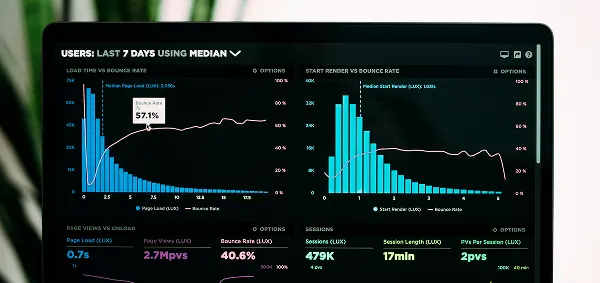
Automated Decisions
AI will help investment-focused businesses assess property opportunities with speed and precision. Property price prediction model valuation systems will support faster review of pricing trends and asset potential before investment decisions take place.
- Speeds up investment analysis
- Improves review of asset value
- Supports better timing decisions
- Reduces manual evaluation effort
Market Analytics
Future valuation systems will rely more on real-time analytics to reflect fast market change. This will help businesses respond to new demand patterns and local activity without waiting for manual review. Build AI property valuation model to analyze shifts.
- Reads live market signals
- Captures fast pricing changes
- Improves response to demand shifts
- Supports timely business action

Adaptive Prediction Models
Future models will improve as they learn through fresh property records and changing market conditions. AI property valuation software will help businesses use valuation systems to stay relevant and useful across different regions and pricing scenarios.
- Learns through new market data
- Improves prediction quality over time
- Adapts across property segments
- Supports product value
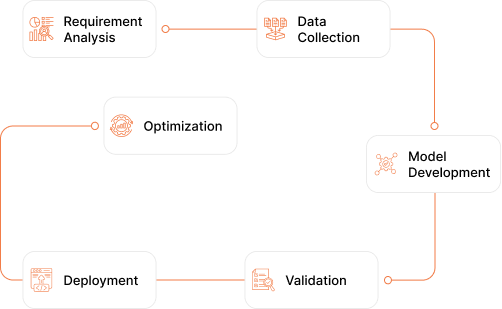
Requirement Analysis
The process begins with a clear review of product needs and user expectations. This stage helps define the purpose of the solution and the type of pricing insight it should deliver. It also sets the foundation for a product to align with workflows and business use.
Data Collection
The next step focuses on gathering property records and market data inputs. The system also removes weak records and organizes the data for model use. This stage improves input quality and prepares the solution for stronger learning and prediction.
Model Development
At this stage, the team builds the prediction logic that powers the solution. The model studies property patterns and market signals to estimate the likely value. This helps create a system that can generate useful output for different property types and pricing needs.
Validation
The model is then tested against existing property data to check its performance. This stage helps measure accuracy to identify gaps and improve prediction quality before launch. It also gives businesses confidence in how the solution will perform in live use.
Deployment
Once the system is ready, it moves into a live business environment. This stage connects the solution with the required platforms and workflows. It helps businesses start using pricing predictions within their product or internal operations.
Optimization
The process continues after launch with regular review and improvement. The system learns through changing market patterns and performance feedback. Real estate price forecasting helps to stay accurate and aligned with business growth over time.
Integration Capabilities of AI-Powered Property Price Prediction Software Development
Real estate AI solutions support smooth integration across the systems businesses already use. It helps connect pricing intelligence with customer tools and platform services. A connected setup improves usability and makes the product easier to adopt across real business workflows.

CRM Systems
Connects customer and property workflows
Supports lead and deal visibility
Improves access to pricing insight
Helps teams act with more context
Pulls records from property data sources
Supports structured data flow
Improves access to listing details
Strengthens prediction input quality

Third Party APIs
Connects with external tools and services
Supports smooth feature expansion
Enables flexible product integration
Improves system interoperability

Cloud Platforms
Supports scalable product deployment
Improves access across digital environments
Helps manage system performance
Enables reliable data handling
What makes Teqnovos different
Scalable Digital Solutions To Power Business Growth
Business success is our benchmark. At Teqnovos, we design and develop custom mobile applications that solve real operational challenges. Our solutions enhance customer experiences and support long-term scalability. By aligning technology with your workflows and market needs, we ensure every solution delivers lasting value.
About Teqnovos
Teqnovos’ team provides custom mobile app solutions to gain a competitive advantage in a growing market. Digital readiness helps businesses build loyalty and scale sustainably. Businesses are moving toward digital experiences that support convenience and speed. Mobile app development plays a key role in meeting these expectations. A well-planned app helps improve customer engagement and repeat purchases. It also gives businesses better control over branding, operations, and data. Book a free consultation with us to become a powerful growth channel in the market.

Frequently Asked Questions
Accuracy depends on data quality model design and market conditions. A well-built predictive analytics real estate solution delivers strong estimates when it learns from clean records and current pricing trends.
The model usually needs past sales records and location details. It also uses property size, amenities, and market activity. Better input with detailed data leads to improved prediction quality.
Yes. The agent connects with existing platforms through custom integration. This helps businesses add pricing intelligence without rebuilding the full product.
The timeline depends on data readiness and integration needs. A simple AI based property price prediction system moves faster. On the other hand, a custom platform with dashboards and third-party connections may take longer.
The model can be trained for different mixed property categories. The final setup depends on business goals and available data.
The model improves when it learns from fresh property and real pricing outcomes. The development process should include clean data pipelines and regular refinement based on prediction accuracy. This helps the system stay relevant across changing property types and market conditions.
The product can be designed to process live inputs and show updated value estimates through dashboard reports or platform interfaces.
No. It supports investment firms and mortgage businesses. It also assists proptech products and planning-focused systems that rely on property value insight.
Teqnovos offers custom development services for businesses that want to build intelligent property pricing solutions. The focus stays on scalable architecture and practical product delivery.
Teqnovos builds solutions around product goals and user needs. Our software development company assists in long-term business growth. Expect custom development support and clear execution with strong technical capability across AI products.
Yes. Teqnovos can build the solution around a specific workflow platform type or industry use case. This helps businesses launch a product that matches real operational needs.
Yes, Teqnovos helps businesses connect solutions with their existing platforms and databases. Hire our dedicated developers to integrate your dashboards with advanced external services. We help businesses adopt the product with less disruption.