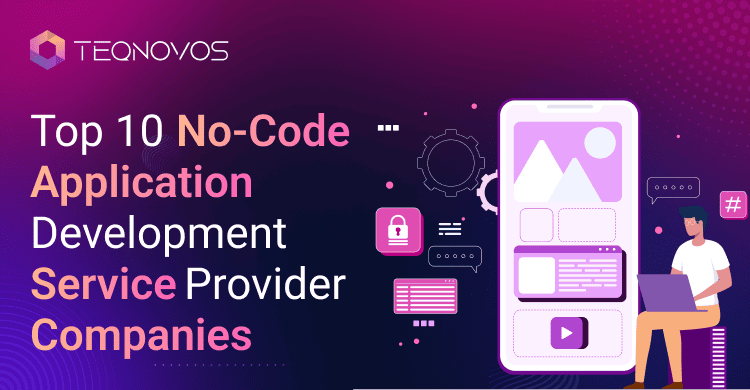
Top 10 No-Code App Development Service Provider Companies
No-code app development is changing how businesses build digital products. This approach removes complex coding needs. Teams create apps using visual builders and simple logic. This process saves time and lowers cost. Thus, companies launch faster in the competitive markets.
Industry trends show strong growth in no-code adoption. Businesses demand faster solutions. They also seek flexible systems that adapt to change, building MVPs. Enterprises improve internal workflows with no-code platforms. This shift reflects a clear focus on speed and efficiency.
Traditional development requires long timelines and large engineering teams. No code platforms reduce this burden. Business teams gain more control over product creation. Faster decisions lead to quicker innovation.
This blog lists the top no-code app development service provider companies. Each company shows unique strengths and capabilities. The goal is to help businesses choose the right partner to test ideas without heavy investments.
What Is No-Code App Development
This refers to building applications using visual tools instead of traditional programming. These platforms allow teams to design interfaces and workflows through drag-and-drop actions. The goal is to simplify development so that even non-tech users can design functional applications without relying on engineers for every step.
Most platforms come with pre-built components such as dashboards and data management systems. Users connect these elements to define how an application works. The platform handles the backend, which means server-side logic and data processing. This reduces development complexity and speeds up delivery timelines.
How No-Code Applications Work?
Every application follows a basic structure. This structure includes three core layers. Understanding these layers helps businesses see how modern platforms simplify development.
Frontend Layer
The frontend layer is the user interface. Users interact with this part of the application. It includes screens and buttons for the user to navigate flows. Visual builders allow teams to design this layer without coding. Changes can be made quickly through simple edits.
Backend Layer
The backend handles logic and processing. It controls how data moves and how actions trigger results. This layer also manages workflows and permissions. Platforms handle the backend. This means server-side operations are automatically handled. Users define logic through visual rules instead of writing code.
Database Layer
This layer stores all application data. This includes user details records and content. Platforms provide built-in data storage systems. Teams create and manage data structures through simple configurations.
How These Layers Connect
Modern platforms connect all these three layers in one system. Users design the interface, then define logic and link data. The platform manages the connections in the background. This creates a complete application without traditional coding.
This structure allows businesses to build applications faster. It also reduces complexity and improves control over development.
Launch scalable no-code applications without the delays of traditional development.
Schedule a CallLow Code vs No Code vs Vibe Coding
Modern app development follows a spectrum. Businesses choose between different techniques based on their goals and technical requirements. Each option offers a different level of control and flexibility.
What Is Low Code?
These platforms allow faster development with limited coding effort. Developers still write small parts of code for customization. These platforms combine visual tools with programming. This makes them suitable for projects that need flexibility and deeper control.
What Is No Code?
No code platforms remove the need for programming completely. Users build applications through visual workflows and ready components. Business teams can manage development without relying on engineers. This approach works best for internal tools and MVPs.
What Is Vibe Coding?
Vibe coding uses artificial intelligence to generate code from user prompts. Developers describe the required functionality, and the system produces the code. This approach speeds up development but still needs technical knowledge to refine and manage results.
| Factor | Low Code | No Code | Vibe Coding |
| Coding Requirement | Requires some coding | No coding needed | Code generated by AI |
| Ease of Use | Moderate | Easy | Moderate |
| Customization | High | Limited | High |
| Speed | Fast | Very fast | Very fast |
| Best For | Complex apps | Simple apps and MVP | Rapid prototyping |
| User Type | Developers | Business users | Developers and tech teams |
When to Choose Each Approach
Low code suits projects that need customization with some technical input. No code fits teams that want speed and simplicity. Vibe coding works well for rapid experimentation with AI support. Businesses should choose based on complexity and business goals.
Why Businesses Choose No-Code Development?
Businesses adopt modern development approaches to stay competitive and move faster. This shift helps teams build and launch applications without long delays. It also supports better innovation across products and services.
1. Faster Time to Market
Speed is one of the biggest advantages. Teams turn their ideas into working applications in less time. This allows businesses to respond to market changes and customer needs. Faster launches create a strong competitive edge.
2. Cost Efficiency
Traditional development requires large teams and long timelines. Visual platforms reduce this dependency. Businesses build and manage applications with fewer resources. This helps control costs while maintaining quality.
3. Flexibility
Teams update features without complex processes. Changes happen through simple adjustments. This allows continuous improvement based on user feedback. Businesses adapt faster without rebuilding entire systems.
4. Better Collaboration
Product managers and business teams work together on the same platform. This improves communication and reduces delays in development. Decisions become faster and more aligned with business goals.
5. MVP Development
Many companies use this approach to test ideas quickly. Teams build MVPs in a short time to check audience feedback and results. This reduces risk and helps validate concepts before scaling further.
6. Alignment with AI
Generative AI development focuses on using artificial intelligence to create code and workflows automatically. This helps businesses automate processes and enhance application features. The combination supports innovation and smarter decisions.
Key Factors to Evaluate No-Code Development Companies
Choosing a suitable generative AI development company plays a critical role in project success. Businesses should evaluate companies based on clear criteria. This helps ensure the final product meets technical and business goals.
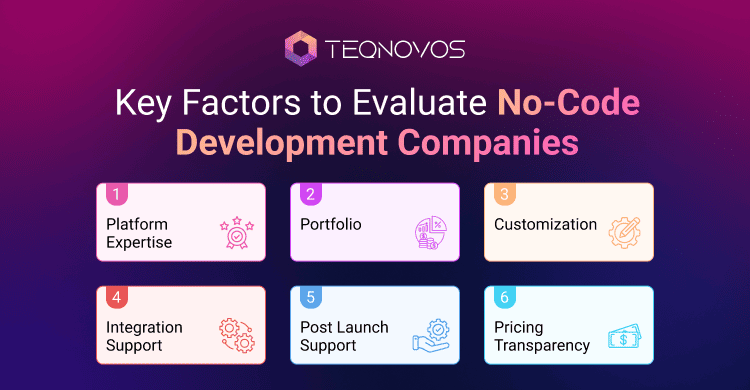
1. Platform Expertise
A strong company should have experience with leading platforms. This includes tools for automation and mobile app development. Expertise ensures better implementation and fewer limitations during development.
2. Portfolio
Past work reflects the real capabilities of the business. Companies should show successful projects across industries. Case studies help understand how they solve business problems and deliver results.
3. Customization
Not all projects follow the same requirements. A reliable partner should offer customization beyond basic templates. This ensures the application aligns with specific business needs and workflows.
4. Integration Support
Applications need to connect with other systems, such as CRM tools and payment systems. Strong integration support ensures smooth data flow and better performance.
5. Post Launch Support
Development does not end after launch. Businesses need maintenance and performance monitoring. A good AI development company provides ongoing support to keep the application running smoothly.
6. Pricing Transparency
Clear pricing builds trust. Companies should provide detailed cost structures without hidden charges. This helps businesses plan budgets and avoid unexpected expenses.
Get ahead of the competition with strategic no code app development that helps you launch faster and innovate with confidence.
Schedule a CallTop 10 No-Code App Development Service Provider Companies
Selecting the right service provider defines the success of an application. Businesses need a company that understands technology and business goals. The following list highlights leading service providers known for delivering scalable and efficient solutions.
1. Bubble
A popular visual development platform used to build web applications without coding. It is widely adopted by startups for quick product launches and early validation.
Key Services
- Visual web app builder
- Workflow and logic setup
- Database and hosting support
Strengths
- Flexible for custom web apps
- Strong community support
- Ideal for MVP
2. Teqnovos
A reliable mobile app development partner for businesses. The team builds scalable applications with modern development approaches. The company focuses on delivering quality digital products to align with business goals. They work closely with clients to turn ideas into functional solutions with precision.
Key Services
- Application development using visual platforms
- Internal tools and business application development
- Customer platforms and digital product solutions
- Generative AI development to automate workflows
Industries Served
- Fintech
- Healthcare
- Retail
- Logistics
Why It Stands Out
- Strong focus on speed and efficient delivery
- Flexible development approach based on business needs
- Scalable solutions built for long-term growth
- Continuous support across the development lifecycle
- Combines business strategy with technical execution
3. Adalo
They focus on building mobile-first applications with a simple and structured interface. It allows users to create apps that can be published directly on app stores. The platform is often used for building customer-facing apps with quick turnaround.
Key Services
- Mobile app creation
- Interface design with reusable components
- User authentication and data handling
Strengths
- Strong focus on mobile experience
- Quick app store deployment
- Clean and structured design system
4. Glide
Build applications directly from data sources like spreadsheets. It allows teams to turn structured data into functional apps with minimal setup. The platform is widely used for internal tools and operational dashboards.
Key Services
- App creation from spreadsheets
- Data-driven interface design
- Real-time data sync
Strengths
- Fast setup using existing data
- Ideal for internal workflows
- Simple and clean user experience
5. Softr
Softr focuses on building web applications and client portals using existing data sources. It connects easily with tools like Airtable and enables teams to create structured frontends without complex setup. The platform is commonly used for membership sites and business dashboards.
Key Services
- Web app and portal creation
- Integration with external databases
- Pre-built templates and layouts
Strengths
- Strong for client portals and dashboards
- Quick setup with data integration
- Clean and structured UI building
6. Webflow
Known for advanced visual design control in web development. It gives teams the ability to build highly customized frontends without relying on traditional coding workflows. The platform is widely used by designers and marketing teams that need precision and performance.
Key Services
- Custom website design with visual controls
- CMS driven content management
- Animation and interaction design
Strengths
- Strong design freedom and control
- Production front-end output
- Ideal for brand digital experiences
7. Airdev
A service-focused agency that builds applications using Bubble. It works closely with startups and growing businesses to deliver custom products with structured development processes. The company is known for its organized approach and clear project execution.
Key Services
- Custom app development using Bubble
- Product strategy and planning
- Ongoing support and iteration
Strengths
- Strong process-driven delivery
- Focus on structured builds
- Experience working with startups
8. Minimum Studio
Focused on building polished digital products with a strong emphasis on user experience. It works with startups and product teams that need clean design and structured application flow. The studio blends design thinking with modern development tools.
Key Services
- Product design and interface development
- Web application builds
- UX focused development
Strengths
- Strong focus on user experience
- Clean and refined product design
- Suitable for design-driven applications
9. Million Labs
Million Labs focuses on helping startups build and launch products quickly using structured development frameworks. It supports founders through early-stage product journeys and focuses on rapid execution. The company is known for working closely with startup teams during initial product phases.
Key Services
- Startup-focused app development
- Product validation and launch support
- Rapid build frameworks
Strengths
- Strong startup alignment
- Fast product delivery approach
- Focus on early-stage execution
10. LowCode Agency
Delivers tailored applications built around specific business workflows. The team works with organizations that need structured systems for operations and internal processes. Its approach centers on aligning tools with real business use cases rather than generic builds.
Key Services
- Business application development
- Workflow design and automation
- System integration
Strengths
- Strong alignment with operational needs
- Structured and practical implementation
- Suitable for process-heavy environments
Advantages of Hiring a No-Code Development Company
Working with a skilled AI development partner helps businesses move faster with fewer risks. It also ensures that applications are built with the right structure and vision.
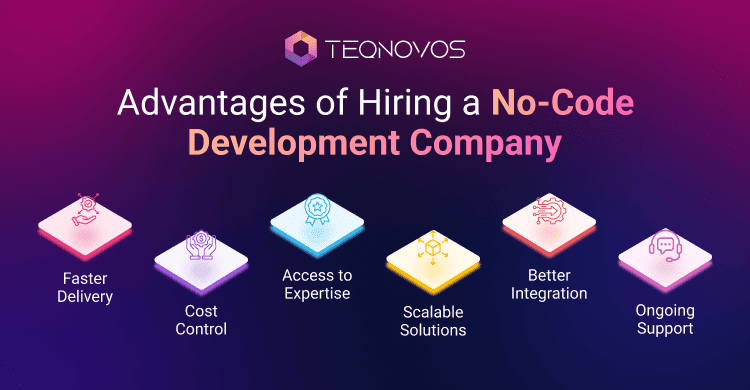
1. Faster Delivery
A skilled team reduces the development time. Projects move from idea to launch in a shorter cycle. This helps businesses enter the market quickly and stay competitive.
2. Cost Control
Development costs remain predictable with a structured approach. Businesses avoid hiring large in-house teams. This leads to better budget management and efficient resource use.
3. Access to Expertise
Companies bring experience across platforms and industries. They understand best practices and common challenges. This improves the quality of the final product.
4. Scalable Solutions
Applications are built with future growth in mind. Teams ensure that systems can handle increased users and features. This supports long term business expansion.
5. Better Integration
A professional team ensures smooth connections with other tools and systems. This improves data flow and overall performance. Businesses can manage operations more efficiently.
6. Ongoing Support
Post-launch support ensures that applications stay updated and secure. Teams provide maintenance and improvements as needed. This keeps the product reliable over time.
Common Use Cases of No-Code Applications
Businesses use modern development platforms to solve real operational challenges. These applications support faster execution and improve efficiency across different functions.
1. MVP Development
Startups build early versions of products to test ideas in the market. This approach allows quick validation without heavy investment. Teams can gather feedback and refine the product before scaling.
2. Internal Tools
Companies create internal systems to manage daily operations. These include dashboards and task management platforms. Such tools improve productivity and reduce manual work.
3. Customer Portals
Businesses build portals for users to access services and data. These portals support account management and communication. This improves customer experience and engagement.
4. Ecommerce Applications
Teams create online platforms for selling products and managing orders. These applications support inventory tracking and user interactions. Businesses launch and manage stores efficiently.
5. Workflow Automation
Organizations automate repetitive tasks and processes. This reduces errors and saves time. Teams focus on important activities instead of manual operations.
The Evolution of No-Code Development in Modern Businesses
Mobile application development services continue to evolve with new tech and smarter tools. Businesses expect faster delivery with higher performance and flexibility. This shift is shaping the future of how applications are built and managed.
1. AI Integration
Artificial intelligence is becoming a core part of modern platforms. Tools support automated workflows and smart recommendations. This improves efficiency and enhances user experience across applications.
2. Vibe Coding
It introduces a new way to build applications using generative AI development. Developers and teams generate code faster and refine features with less effort. This approach supports rapid experimentation and innovation.
3. Enterprise Adoption
Large organizations are increasingly adopting visual development platforms. These tools help build internal systems and customer applications at scale. Enterprises benefit from faster delivery and better control over processes.
4. Hybrid Development
Businesses are combining different approaches for better results. Teams use visual platforms along with traditional development when needed. This creates a balance between speed and customization.
How to Choose the Right No-Code Development Partner
Hire Developers of No Code Builders for successful application development. Businesses should focus on technical capability and alignment with goals. The right partner ensures smoother execution and better outcomes.
1. Business Goals
Clear objectives help guide the development process. Businesses should identify what they want to build and why. This ensures the partner understands the expected outcome and delivers accordingly.
2. Technical Expertise
A strong partner should have experience across platforms and use cases. This ensures better decision-making during development. It also reduces the chances of technical limitations later.
3. Review Work
Case studies and previous projects provide insight into real capabilities. Businesses should assess how companies solve problems and deliver results. This helps build confidence in their approach.
4. Check Communication
A clear point of contact is essential for a smooth partnership. Teams should provide regular updates and maintain clarity. This ensures alignment throughout the development cycle.
5. Pilot Project
A small project helps evaluate working style and delivery quality. Businesses can assess performance before committing to larger investments. This reduces risk and improves business decisions.
Conclusion
No-code app development has changed how businesses approach digital product creation. Companies build applications faster and with better control. This shift allows teams to focus on innovation and less on technical complexity.
The growing adoption of AI tools, such as voice AI solutions for banking, shows a clear direction for the industry. Businesses adapting these methods gain a strong advantage. They test ideas to improve products faster and respond to market changes with confidence.
Choosing the right development partner plays a key role in success. A reliable company brings technical expertise and business understanding.
Teqnovos stands out as a strong choice for companies looking to build scalable and future-ready applications. The future of mobile application development continues to evolve. Connect with us to lead the future.