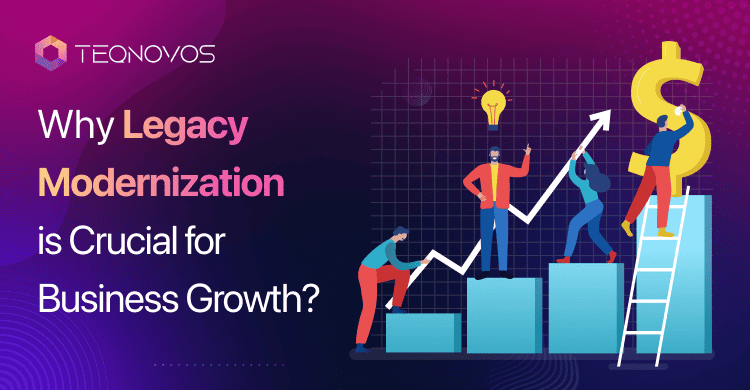
Why Legacy Modernization Is Essential for Business Growth?
Something new is showing up with modern technology now and then. Because of this, businesses and customer demands are raising standards for growth. They expect faster services and reliable digital options.
Businesses are trying to keep up with this, but that brings a question: Is your system able to keep up with all this change?
The truth is, most businesses still rely on legacy systems, even if they don’t admit to it. These outdated software have been around for years and thrived because they continue to work with convenience.
However, with the business environment shifting, customers expect an easy digital experience. The competitors move quickly, adapting to new trends. Legacy systems were not built for this level of speed or complexity. They slow teams down and become expensive to maintain over time.
So, what to do about it? This is where IT legacy system modernization comes in. This blog will discuss the different difficulties faced around legacy systems and how modernizing now can future-proof your business for growth.
Common Challenges Caused by Legacy Applications
Legacy systems might seem reliable because they’ve been around for so long, but over time, they start causing real challenges. These old systems move slowly and do not rely on constant digital interactions. The gap between what these old systems can do and what businesses actually need is getting bigger every year. Here’s what usually goes wrong:
Limited Scalability
As the business grows, these older systems often hit their limits. They struggle with heavier workloads and increased data accumulation. With more and more users using the platform, it becomes slow.
Complex Integrations
Connecting legacy apps with modern tools can be difficult. A simple legacy software modernization integration turns into a long project because the system has a rigid architecture and uses incompatible data formats.
Security Vulnerabilities
Old systems lack modern security features and updates. This leaves a huge gap that makes it harder to protect data and makes it easier to exploit.
High Maintenance
Maintaining these systems is expensive. The system requires constant updates and experts, who are harder to find. The time and money spent on outdated hardware keep adding up with time.
Restricted Agility
Want to launch a new feature or improve a workflow? With old designs, even small changes feel clunky. This slows down innovation and makes it difficult to adjust to new opportunities.
Legacy systems might still function, but they no longer support the speed or flexibility businesses need today. This becomes a growing issue over time. Therefore, businesses are moving towards modernizing these old legacy systems.
What Is Legacy Modernization?
It is a process of updating or replacing the old systems to better align with modern tech. Most companies still use applications built years ago. Using legacy modernization, they rebuild them, making them more competitive in the market.
Workload has become heavier, and businesses need tighter security. The old system cannot keep up with this growing pace. Those older systems simply weren’t designed for that pace.
The legacy modernization approach gives them a new life. It involves upgrading the technology or redesigning certain components. It is a must to ensure that the system runs smoothly and connects better with modern tools.
The legacy modernization strategy also plays a big role in digital transformation. The main objective is to transform the foundational system to support the upcoming shift. Choosing a technical upgrade helps modernize the foundation to make everything possible.
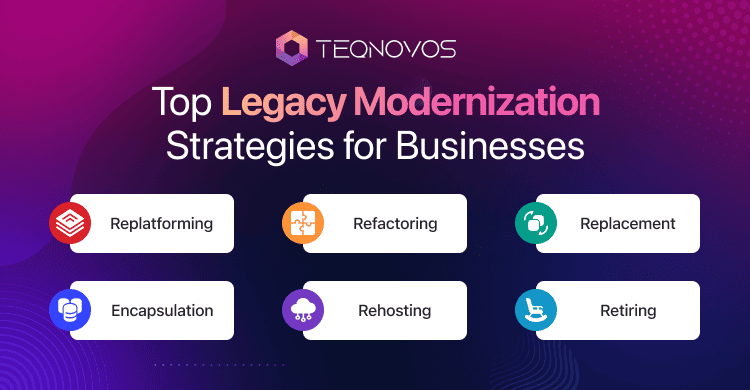
6 Top Legacy Modernization Strategies for Businesses
Every application has its own complexities and business values. Hence, it is essential to follow the best practices for legacy code modernization to align with the goals and timeline. Below are some modern approaches to help businesses adapt to the change:
Replatforming
It involves moving the existing application to a newer platform. You can choose to move it to the cloud or some other new platform. This helps enhance performance and lower the infrastructure costs without a rebuild. It speeds up things and adds flexibility to the platform.
Refactoring
This strategy of modernizing legacy systems focuses on reconstructing or improving the code. It helps enhance the non-functional aspects of the code, such as security and automation. This strategy works well for apps that work efficiently but have slowed down due to minor issues.
Replacement
This option involves completely rewriting the code or modernizing legacy systems by replacing the medium. Starting fresh gives complete freedom to redesign features and architecture. It requires more time and investment but pays off in the long run.
Encapsulation
Add APIs or micro-frontends around a legacy system to reveal its functionality for new digital channels without changing the core application. This is a less disruptive way to integrate legacy modernization with front-end development.
Rehosting
It is also known as “lift and shift”. This involves moving applications to a new hosting ecosystem. It is a quick and cost-effective method for instant adaptability.
Retiring
It is important to realize when to let go of tools when they no longer serve the purpose. Changing outmoded components reduces clutter and frees resources for more important modernization efforts.
Modernize your legacy systems today and boost long-term business performance. Connect with our experts today!
Schedule a Call8 Step-by-Step Legacy System Modernization Process
Before starting legacy application modernization, it’s crucial to follow a simple workflow. Clear steps help teams stay organized and avoid shocks. Here’s a simple version that feels natural and easy to follow.
Assessment & Discovery
Begin by understanding the current system. Review every application, see what still works based on that identify the vulnerable areas. Look at the quality of data and its dependency on the system. See what day-to-day challenges users are facing. Having a clear view of these areas helps get a starting point.
Needs Assessment
Conduct thorough research to find the specific demands and issues in the existing system. Seek help from developers and analysts to explain what slows them down and how to improve. These insights guide better decisions.
Define Success Criteria
Set a clear business objective before moving ahead. Legacy modernization techniques enable faster performance and provide room for future growth. These techniques help businesses improve customer satisfaction and enhance efficiency. The overall transformation delivers value to the company.
Select Modernization Approach
Choose the method that fits best. The right choice of modernization of legacy systems helps solve complex issues. Select the option that aligns and delivers services for the longer term.
Plan and Prioritize
Break the work into smaller phases. Start with systems that have the most impact on daily operations. Plan data migration and outline legacy system replacement strategy to minimize interruption.
Implementation and Testing
This is where the real work happens. Start by updating the code and rebuilding the infrastructure. These steps are further followed by testing of the code. This legacy application modernisation technique helps confirm that the features work as expected.
Deployment and Change Management
Roll out the modernized legacy system in stages to reduce disruption. Support users with training and simple guidance to ensure a smooth transition.
Continuous Testing
After the launch, track the performance of legacy software modernization and collect feedback. Use this data to refine and improve the system over time.
Key Benefits of Modernizing Legacy Applications
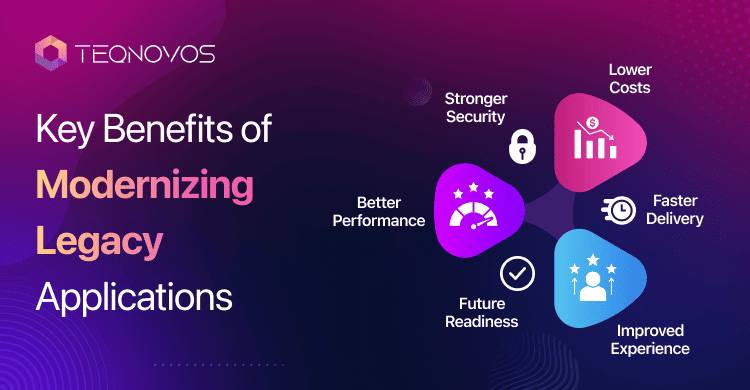
Legacy code modernization systems bring improvements that help businesses operate smoothly and grow. This opens up doors for new opportunities. Here are the key benefits explained:
Better Performance
Modernizing legacy applications significantly boosts performance and reliability. They react faster and run easily on the platforms. They handle larger workloads and growing data without slowing down the system. This creates a more reliable environment that keeps up with the business demands.
Stronger Security
Older systems often miss key protections. Upgrading them adds modern security features that help prevent breaches. Using modernization strategies for critical transactional systems helps reduce security risks.
Lower Costs
Legacy systems usually demand constant repairs and fixes just to keep running. A modern setup reduces these ongoing expenses. The new infrastructure cuts down debts and leads to long-term savings.
Faster Delivery
A legacy modernization system allows teams to roll out updates and improvements quickly. This helps the business respond promptly to market changes without long delays.
Improved Experience
Employees and customers feel the difference immediately. Modern systems load faster and integrate more effectively with modern tools. Thus, creating a smoother user experience.
Future Readiness
Legacy code modernization creates a stronger base for cloud adoption and AI. It prepares the business for new opportunities, such as automation in operations.
Risks and Challenges in Legacy System Modernization
Modernizing a legacy system can be complex. The legacy system decommissioning process includes high costs and integration challenges with new technologies. Key issues also include a shortage of skilled professionals and a lack of familiarity with the system.
These challenges can slow down the process if not handled carefully. Some of the risks are described below:
Risks
System Complexity
Many legacy applications have tangled code and hidden dependencies. This makes it harder to update or rebuild parts of the system without unexpected issues arising. Using system analysis and dependency mapping, teams can rebuild the parts of the systems safely.
Data Migration Issues
Moving data from old systems to modern platforms can be difficult. Differences in formats or structures may lead to errors. It could result in data loss or poor migration. Careful planning with automated migration tools helps ensure a secure data transfer.
User Resistance
People get comfortable with familiar tools. When workflows change, teams may hesitate or push back. Clear guidance and training help ease this transition.
High Investment Needs
Legacy application modernization strategies take time and financial commitment. It’s important to check the expected return so the effort feels worthwhile.
Operational Disruption
During the migration of data, the daily business operations could be affected. Careful scheduling and backups help keep the plan on track and minimize disruption.
Challenges
Lack of Skilled Personnel
There is a shortage of talent with the capability in outmoded legacy technologies.
Incomplete Documentation
Outdated or missing system documentation makes it difficult to understand the old system. It leads to increased complexity in the legacy modernization.
Complex Interdependencies
Legacy systems often have complicated connections to other applications. It increases the risk of unintended impact during updates.
Resistance to Change
Employees familiar with old systems may resist new technologies. They may fear the learning curve or disruption to their workflow.
However, the best and recommended legacy code modernization tools could help overcome these risks.
Best Practices for a Successful Legacy Modernization Journey
Modernize in Small Steps
Establish the goals and start small. Making big changes at once could feel risky. A well-planned approach makes things smoother and gives teams room to adapt better.
Focus on High-Value Areas
Not every system required immediate attention. Prioritize the parts that need legacy system replacement. Check what slows the business down and could offer significant results when modernized.
Open Communication
Modernization impacts daily work. Regular updates and honest conversations help teams feel ready through the transition.
Test and Back Up Everything
Thorough testing catches issues early. Reliable backups and rollback plans add safety when moving data or integrating new components.
Build With the Future in Mind
Choose modern architectures and tools that make it easy to adapt. Microservices and APIs help keep the system flexible over time.
Security & Compliance
Modernization is not only about performance, but also about enhancing security and reducing risks. Many legacy systems carry security or compliance vulnerabilities.
Cost & ROI Awareness
Legacy systems cost more over time. Modern guides often recommend reviewing long-term costs and expected returns before embarking on modernization, to ensure the effort makes business sense.
Future Trends in Legacy Application Modernization
Legacy system modernisation is advancing quickly, and the future looks even more forceful. Cloud-native architecture is set to play a major role in offering faster deployments. These new technologies help businesses move from rigid systems to more flexible setups.
Automation and DevOps practices will also shape the next wave of modernization. Another important shift is the focus on continuous evolution. Thus, they have begun to design a system that adapts as the tech trends shift.
Conclusion
Legacy systems may have supported business for years, but the advanced digital world demands flexibility. That’s where IT legacy modernization becomes essential. It helps organizations break free from outdated technology and move toward advanced systems.
At Teqnovos, we understand the challenges companies face when working with legacy systems. Our expertise and modern engineering practices help businesses modernize with confidence. Hire dedicated developers from us to modernize your systems. Set the stage with us for the next level of growth.