Why Angular Developers Have Become Essential For SaaS Products?
Looking around the SaaS world shows one clear thing: the competition is brutal. With new trends and product launches, customer expectations keep rising. Businesses need to ship features faster than ever.
The evolving ecosystem requires businesses to choose the tech that could help build the product. And that’s exactly where Angular steps into the spotlight.
You must have seen that most companies are leaning toward Angular. Ever wondered what all this hype is about? Why Angular? What makes it stand out?
Well, Angular has become a preferred framework for many. It is reliable for building scalable and responsive SaaS applications. This framework is based on TypeScript to help developers build engaging applications.
In this blog, we’ll break down why to hire Angular developers for SaaS products and how they could support development. Let’s dive in.
The Emergence of Angular in the SaaS Sector
If someone noticed the SaaS space over the last year, they would have noticed a pattern. The products are getting smarter and more feature-heavy.
A SaaS app is no longer just a simple dashboard with a login page. Companies are building complex platforms and multi-tenancy apps. They use Angular specialists to build apps that function smoothly, no matter the number of users.
And this is exactly why Angular started making noise.
Why Did Angular Rise in Popularity?
Well, the shift wasn’t random. Angular came in at a time when SaaS teams were tired of juggling too many libraries and inconsistent setups. They wanted something stable and resilient. Something that wouldn’t fall apart if a team member left.
A few reasons showcasing how hiring remote Angular developers helps:
- Backed By Google: Companies trust frameworks that have long-term support and strong engineering behind them.
- Built with TypeScript: SaaS platforms and developers like working with TypeScript. It helps Angular specialists improve code quality and make teams efficient.
- Opinionated structure: Angular doesn’t make a guess or pick between dozens of tools. It gives a clear way to build the app from day one.
- Thriving ecosystem: Tools for routing, testing, and authentication are more built in. Thus, SaaS teams spend less time setting up and more on shipping features.
How SaaS Teams Deliver Well With Angular?
Modern SaaS applications are not just websites. They are dynamic platforms serving thousands of users at one time.
Think about what a typical SaaS platform needs: Speed and the ability to grow without breaking.
Angular delivers all of that. It handles:
- Real-time interactions.
- Heavy dashboards.
- Big codebases with multiple developers.
- Multi-tenant features that need consistency.
Even if businesses hire remote Angular developers, they do not need to spend weeks decoding the architecture. They can start contributing instantly.
A Perfect Match for Growing SaaS Businesses
As SaaS businesses move toward API apps and scalable architectures, Angular fits right in. It grew with the industry and solved the exact problems SaaS teams were facing.
In short, SaaS companies didn’t just “pick” Angular. They needed a framework that could grow with them, and Angular proved it could.
Angular Supports API-First Development
API-first development has become the backbone of modern SaaS products. Teams now focus on creating strong, reliable APIs from the start.
Once the API layer is solid, the rest of the product connects to it with ease. This Angular support for an API-first development approach keeps SaaS platforms flexible.
Why API-First Matters in SaaS
SaaS systems constantly exchange data between internal services, databases, and external platforms. An API-first model simplifies this communication and creates room for smoother product expansion.
This approach brings several advantages:
- Faster and cleaner integrations.
- Consistent data handling across multiple interfaces.
- Easier scaling without major rewrites.
- Support for multiple client applications from the same backend.
It sets a strong technical foundation that helps teams innovate faster.
Where Angular Fits In
Angular blends with an API-first workflow. The framework handles data communication and reduces common difficulties. They help teams when working with complex APIs.
A few significant benefits include:
- Built-in HttpClient for handling API requests out of the box
- TypeScript’s strong typing, which helps maintain clean, predictable data structures
- RxJS, which makes asynchronous data and real-time updates straightforward
- A modular design, allowing features to be divided into reusable, API-connected pieces
These traits make Angular feel well-aligned with the way modern SaaS platforms operate.
A Strong Match for Microservices
With more and more SaaS companies heading towards microservices, Angular continues to fit with them easily. It doesn’t matter if the data comes from a single service or an entire ecosystem. Angular specialists manage those interactions without unnecessary complexities.
In simple terms, Angular supports API-first development with ease. It makes the process organized and scalable.
Primary Benefits of Angular for SaaS Development
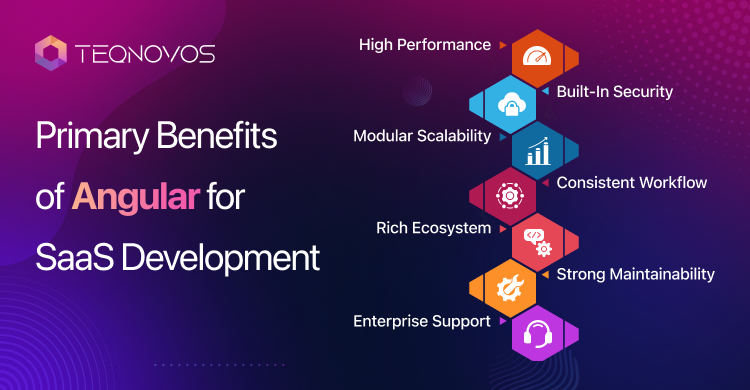
Angular continues to stand out in the SaaS development landscape. It blends speed and long-term reliability. As SaaS platforms grow more complex, Angular provides a solid base. It helps keep development predictable and maintainable. Its design supports rapid scaling and a smoother development experience.
High Performance
SaaS businesses hire Angular developers to deliver excellent performance right from the start. AOT compilation and streamlined rendering help applications load faster and run efficiently. This performance advantage becomes valuable for SaaS platforms that manage large datasets.
Built-In Security
Security remains a top priority for any SaaS product. Skilled Angular developers help teams stay ahead of common threats with integral security measures. It includes various security features, including automatic DOM sanitization. These reduce common vulnerabilities and create a safer environment for sensitive data.
Modular Scalability
The modular structure allows teams to break features into reusable and manageable parts. As platforms expand or add new capabilities, the architecture remains organized and easier to maintain. SaaS businesses hire Angular developers to support long-term scalability.
Consistent Workflow
Angular provides clear patterns and structures that reduce confusion across development teams. Angular CLI and TypeScript work together to create a consistent workflow. This shortens onboarding time and minimizes code fragmentation.
Rich Ecosystem
Angular includes built-in solutions for routing and other functions. With so many tools already integrated, developers spend less time on setup. They invest more time in building meaningful product features.
Strong Maintainability
Angular encourages clean and maintainable code. TypeScript improves readability and helps teams track changes with confidence. This maintainability is essential for SaaS products that evolve.
Enterprise Support
Many enterprise SaaS businesses hire Angular development teams for long-term support. This support gives teams confidence that the framework will remain stable and future-ready.
Why SaaS Businesses Hire Angular Developers for Faster Product Growth?
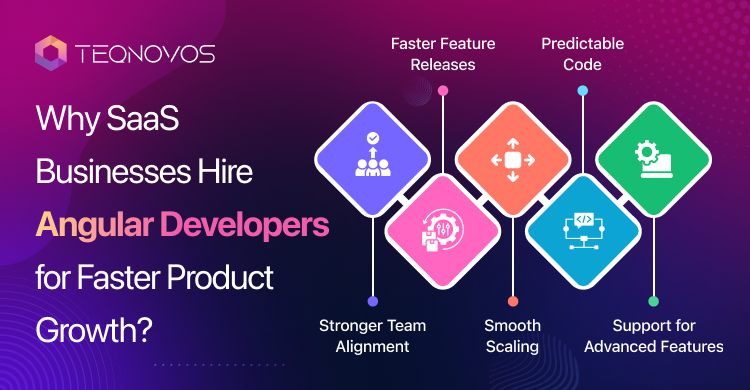
The SaaS market rarely slows down. Products evolve nonstop, and new competitors appear every month. With this, the customer expectations shift quickly. To keep up with this pace, SaaS businesses hire Angular development teams who bring structure and speed to the development process. Their expertise, paired with Angular’s framework, creates a strong foundation for growth.
Faster Feature Releases
Angular has built-in tools and an architecture ready to use. It helps teams avoid those usual setup delays. Developers can start to build Angular applications without debating libraries.
This momentum leads to quicker rollouts and a faster response to shifting product needs.
Predictable Code
TypeScript plays a big role in keeping SaaS projects organized. With clear type definitions and structured patterns, developers catch issues earlier. This cleaner codebase results in smoother development cycles and fewer delays caused by unexpected bugs.
Stronger Team Alignment
Angular gives teams a shared way of working. Everyone follows the same patterns and the same development flow. This consistency helps new developers onboard faster and keeps collaboration steady. This approach is beneficial if a SaaS business hires Angular developers or the project becomes more complex.
Smooth Scaling
Growth brings complexity, and Angular handles that complexity pretty well. Its modular nature lets teams expand features or integrate additional services without any hassles. It protects the code from being in a tangled mess. This structure supports growth instead of slowing it down.
Support for Advanced Features
SaaS platforms often rely on analytics and charts. Using a reactive programming approach and component-driven design, these features become easy to build.
How Angular Improves SaaS Scalability and Performance?
Every successful SaaS product relies on scalability and the performance of the app. With the growing user base and features, the tech must keep up without slowing down. Angular plays a strong role here by offering tools and structures that help SaaS platforms stay ready for ongoing growth.
Efficient Rendering
Angular uses optimized change detection and smart rendering techniques to keep interfaces responsive. The platform handles a large volume of data seamlessly. Features like AOT compilation reduce load times. On the other hand, Angular’s internal mechanisms ensure updates appear smoothly across the application.
Modular Architecture
The component-based design in Angular supports keeping features organized and managed. Each module remains independent. This allows teams to expand or update parts of the system without interrupting the rest. This modularity becomes especially valuable as SaaS platforms add new capabilities.
Lazy Loading for Better Speed
It helps applications load only the essential parts at first. Then it fetches additional modules as per demand. This reduces initial load time and creates a smoother user experience. SaaS platforms with dashboards use lazy loading to help keep the application fast.
Strong Handling of Complex Data
SaaS products often deal with charts and continuous data flow. Angular’s seamless integration with cloud services makes it easier to manage and update data in real time. It helps update interfaces without lag. This support maintains performance, even under heavy usage.
Stable Long-Term Updates
Angular’s structured release cycle and support help products remain stable as the framework evolves. Regular updates and predictable changes help maintain the functioning of the app.
Conclusion
Angular has become a strong partner for SaaS companies aiming to grow and stay competitive. Its ingrained features make it easier to build reliable and scalable products. With strong data handling and long-term maintainability, Angular brings both stability and speed to modern SaaS platforms.
Angular developers play a key role in helping products’ SaaS platforms scale. Partner with Teqnovos to hire Angular developers and deliver a better experience for your users.