How To Set Up A Global Capability Center In India?
India is no longer seen as just a support destination. It has become a serious growth market for global companies. Many businesses look at how to set up a global capability center in India because they want stronger control and access to talent.
A modern global capability center does far more than manage routine tasks. It supports product development with engineering and digital transformation. This has led to the most asked question among business leaders: What is a global capability center? This has become a strategic hub to generate long-term value for business.
This shift has changed how companies think about expansion. They are no longer focused only on cost. They also want innovation scale and closer alignment with business goals. That is where India stands out. It offers the talent ecosystem and delivery maturity needed to support this model.
Read this blog to know more about GCC. It also explores how companies build one with the right structure and leadership governance.
What Is a Global Capability Center?
Global Capability Center Definition: How It Works?
Many business leaders search global capability center definition and how it works before they evaluate this model. The center stays closely connected to the parent company. It follows the same goals and standards. This setup gives the business more control than an outsourced model.
Core Role
A GCC supports various functions across the business. These may include product development and digital programs. Some centers also take ownership of innovation and process improvement. That wider role makes the model more valuable for growth. Many global firms now want to know how to set up a global capability center with the right structure
Why It Matters
Many companies still ask what a global capability center is when they compare GCC and outsourcing models. Companies use these centers to build capability inside the business. They rely on them for stronger execution and deeper alignment with global teams. That is why this model has become a strategic choice for expansion.
A Bigger Shift
Older offshore setups often focused on task-based delivery, but GCC follows a different approach. The model helps companies build dedicated teams to retain knowledge and create value across regions. It supports scale ownership and business growth. A common search query is what a global capability center is and why it matters for global growth.
Why Companies Are Moving Beyond Traditional Offshore Models
Traditional offshore models helped companies lower costs. That was the main goal for years. Business leaders now want stronger control and direct ownership of critical work. Many companies see India-based GCCs as strategic centers and not just support units.
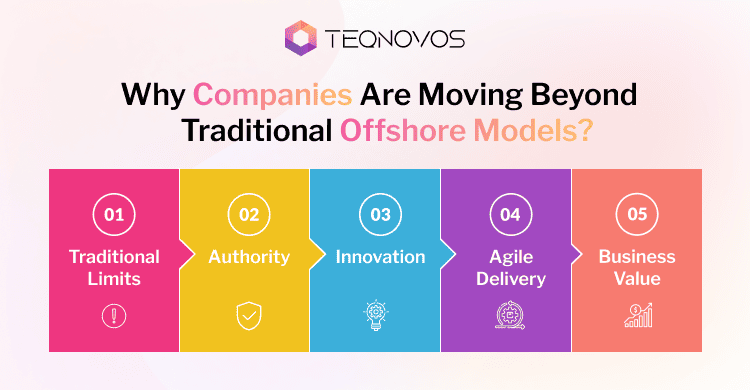
Traditional Limits
The earlier offshore model worked well for routine support work. It helped firms move tasks to lower-cost locations. Still, it often created distance between the core business and the teams doing the work. That gap slows decisions and reduces visibility. A GCC model solves this by giving the business more direct alignment with delivery teams.
Authority
Control is a major reason for this shift. Global firms want direct oversight of systems team data and delivery quality. They also want better protection for intellectual property. A GCC setup gives them a stronger in house structure than a pure vendor model. That makes it easier to manage quality performance, and business goals.
Innovation
A common search query is what a global capability center is and why it matters for global growth. Companies no longer want offshore teams to handle only support tasks. They want them to contribute to engineering product development and digital transformation. This is one of the biggest changes in the market. The focus has moved beyond cost. The new goal is innovation with ownership.
Agile Delivery
Speed is shaping business decisions. Firms need teams to work closely with headquarters and move faster on product updates and expansion plans. A direct operating model reduces friction. It also improves alignment across teams and markets. That is why many companies are rethinking older offshore structures.
Business Value
The biggest shift is in mindset. Offshore software development was once seen mainly as a cost lever. Now companies expect business value. They want centers that help drive growth and build new capabilities. A GCC fits that need better because it becomes part of the core business. This helps companies build a scalable offshore software development engine for long term growth.
Key Drivers
- Better control over core business functions
- Stronger ownership of talent systems and outcomes
- Faster execution across global teams
- Higher data security and protection
- More room for innovation and product thinking
- Greater long-term value than a cost-focused model
Power your expansion with the right strategy. —launch your GCC in India today
Schedule a CallStrategic Advantage of India’s Global Capability Center
India has become a strong choice for companies to build a Global Capability Center. Businesses look for skilled talent and stronger value. The strategic advantage of India’s global capability center comes from talent scale and business maturity.
1. Talent Depth
India offers a large talent pool across engineering and enterprise technology. This makes it easier for companies to build teams with technical and business skills. It also helps them grow faster without searching across multiple markets.
2. Sector Strength
India supports GCC growth across many industries. These include banking and telecom. That sector depth matters. It allows companies to find professionals with direct domain knowledge and not just general delivery experience.
3. Mature Ecosystem
Habours a well-developed GCC environment for companies. Global firms access hiring partners and business services with less friction. This reduces setup challenges. It also helps companies move with more confidence in the early stages.
4. Innovation Shift
The role of a GCC in India has changed in recent years. It is no longer seen only as a support center. Many businesses use these centers for product research and digital transformation. This is a clear part of the Strategic Advantage of India’s global capability center for global firms.
5. Scale Advantage
India gives companies room to start small and expand with control. Businesses launch with a focused team and then grow into a larger cross-functional center over time. That flexibility supports new market entrants and mature enterprises.
6. Long Growth
India continues to attract global companies looking for stable and long-term expansion. The market has shown steady growth and strong business interest. This gives decision makers confidence when they plan a GCC model for the future.
How to Set Up a Global Capability Center in India
Setting up a Global capability center in India needs more than a hiring plan. It needs a clear business goal and a strong operating structure. The right setup helps a company build control and bring value. Each step should support the larger business vision and not just the launch stage.
1. Clear Goals
The first step is to define the purpose of the center. A company should decide what the GCC will own and what business problem it will solve. Some centers focus on engineering. A clear scope helps leaders avoid confusion and weak execution. This is one of the first steps in how to set up a global capability center the right way.
2. Right Model
The setup model shapes how the GCC will launch and grow. Some companies build a captive center with full ownership from day one. Others begin with a partner-led route and then move into a fully owned structure later. The right choice depends on budget and internal control needs. It also helps them drive innovation from a centralized hub with stronger business alignment.
3. Smart City
City selection affects talent access cost and business continuity. A company should choose a location based on skill availability and growth potential. Bengaluru, Hyderabad, Chandigarh, Chennai, and Delhi NCR often stand out for different reasons. The best city is the one that fits the center’s goals and hiring plan.
4. Legal Base
A strong legal structure gives the GCC a stable foundation. This step includes entity setup planning and data-related obligations. Legal planning should support current operations and future scale. A weak structure at this stage creates delays and risks later.
5. Strong Team
Hiring should begin with leadership. A GCC needs local leaders who understand delivery talent and cross-border coordination. The hiring plan should focus on capability quality and retention. This becomes even more important when a business wants to set up cross-border GCC operations.
6. Tech Setup
Technology and infrastructure shape how the center performs from the start. The business should plan secure systems and operational support early. Office setup also matters for some models. A reliable environment helps teams work with clarity and reduces friction across locations.
7. Clear Governance
Governance defines how decisions are made and how performance is measured. A GCC should have clear reporting lines and ownership rules. This creates alignment between headquarters and the India team. Clear governance is essential when companies want to set up cross-border GCC teams.
Build your global capability center in India with the right strategy —connect with experts
Schedule a CallRe-Thinking Offshore Models
Re-Thinking Offshore Models has become important because cost alone no longer drives expansion decisions. Companies no longer want delivery centers that handle support tasks. They want teams to build products and support business goals. This shift is changing how global firms think about growth in India.
- Shift from support work to strategic business functions
- Move from task execution to product ownership
- Higher focus on innovation and digital growth
- Stronger demand for data engineering and analytics teams
- Rising investment in artificial intelligence AI capabilities
- Need for direct control over quality and outcomes
- Better alignment between global teams and business goals
- Expansion into finance and other enterprise functions
- Focus on long term value and not short term savings
- Preference for GCCs as a more integrated operating model
Governance, Security, and Harmonized Compliance Architecture
Talent and delivery matter, but they are not enough on their own. The center also needs clear governance and aligned compliance standards. This helps the business scale with confidence across regions.
1. Legal Structure
The legal setup should support the business model and future growth plan. A clear structure helps define how the center will operate and how responsibilities will be managed. This creates a stronger base for expansion.
2. Data Security
Security should be part of the setup and not an afterthought. The center should have clear access controls and data handling rules. This becomes important when the team supports product development analytics or customer operations.
3. Tax Discipline
Tax planning should align with the operating model. A clear structure helps the business manage obligations with clarity. It also supports smoother growth as the center expands. Governance, security, and harmonized compliance architecture help reduce risk as the center grows.
4. Labor Rules
Employment practices should follow local requirements and internal business standards. This includes contracts and team management processes. A well-planned approach reduces future friction.
5. Reporting Controls
The center should have clear reporting lines and decision ownership. This improves visibility across teams. It also helps leaders track performance with less confusion.
6. Cross Border
A GCC works best when the team stays aligned with the organization. Shared standards across policy and continuity planning help the center work as one part of a larger global structure. To set up cross-border GCC models, companies need shared standards across regions.
Re-Thinking Offshore Models now points companies toward stronger ownership and business value. Governance, security, and harmonized compliance architecture should be built into the model early.
Common Mistakes That Delay GCC Success
Many delays start with small decisions that create larger gaps later. This is why planning needs clarity at every stage and not just during launch.
1. Unclear Scope
Some companies start without a defined role for the center. Teams are formed before priorities are clear. This leads to overlap confusion and uneven delivery. A GCC works better when the scope is tied to real business goals.
2. Weak Leadership
Local leadership plays a major role in early success. A center may struggle when decision makers do not have enough authority or market understanding. Strong leaders help connect local execution with global expectations.
3. Poor Location
City selection affects hiring growth and longer stability. A wrong choice limits access to the right talent and slows expansion. The best location is not always the lowest cost option. It should match the function and scale plan of the center.
4. Slow Hiring
Hiring delays weaken the launch phase. Critical roles may stay open for too long. Teams may also grow in the wrong order. A stronger hiring plan helps the center build momentum with less disruption.
5. Weak Integration
A GCC should work as part of the business and not as a separate unit. Problems begin when communication is limited, and teams operate in silos. Better integration improves alignment and helps the center contribute faster.
6. Limited Ownership
Some businesses treat the GCC as a support office and not as a strategic capability center. That mindset reduces impact. It also limits the kind of work the center can do. A GCC provides more value when it is trusted with core functions. This trust helps the business maintain complete operational control as the center matures.
How GCCs Shift from Support to Strategic Innovation
GCC begins with focused delivery work and support operations or process execution. Over time, the role expands, and centers take on ownership. The shift from operational support to strategic innovation defines the modern GCC journey.
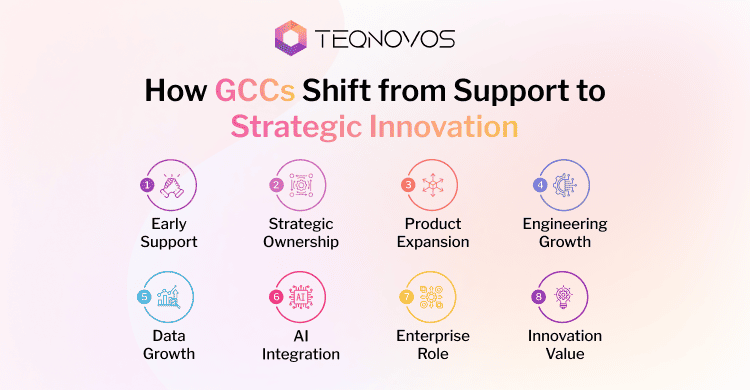
Early Support
In the early stage, a GCC usually handles structured work. This helps the business build a stable base. It also allows leaders to test processes and operating rhythm before expanding the scope. It also gives companies room to expand globally without heavy local investment in every market.
Strategic Ownership
As the center matures, it starts taking on work that needs stronger judgment and closer business alignment. This may include product support platform management or shared decisions across functions. The center is no longer seen as an execution unit alone.
Product Expansion
Many mature GCCs move into product ownership. Teams begin to support roadmaps and platform performance. This shift brings the center closer to customer needs and business outcomes.
Engineering Growth
Engineering becomes a major part of the next phase. GCC teams may handle application development and system improvement. This creates more direct value because the center starts building and improving core business platforms.
Data Growth
Data functions also grow with maturity. The center may expand into analytics and business intelligence. These roles help leaders make better decisions and create stronger visibility across the organization.
AI Integration
AI becomes more relevant as the center develops deeper capabilities. Teams may support automation and new use cases across business functions. This kind of work needs stronger ownership and closer coordination.
Enterprise Role
A mature GCC often grows beyond technology functions. It may support finance and cybersecurity procurement. This shows a larger shift in role. The center becomes a strategic part of enterprise operations.
Innovation Value
The biggest sign of maturity is this change in mindset. The GCC is no longer valued only for delivery capacity. It is valued for innovation and business contribution. That is when the center starts creating strategic impact. This marks the shift from operational support to strategic innovation inside the business.
This is also why Re-Thinking Offshore Models has become part of the GCC conversation.
Conclusion
Setting up a global capability center in India is not just about cost savings. It is about strategic growth and business value. With the right planning, it becomes an integral part of the business. The key to success lies in aligning business objectives with business vision.
The journey to building a successful GCC in India is a strategic move. It requires thoughtful consideration at each stage. For many companies, the strategic advantage of India’s global capability center lies in long-term capability and control.
Teqnovos offers businesses GCC development services to build their team. Connect with us today for a free consultation and learn more about how we can help you. Book your call now!