How Much Does It Cost to Set Up GCC In India?
Companies no longer ask only if they should build a GCC in India. They also want to understand the cost to set up a GCC in India before they make that move.
A global capability center is viewed as a long-term business decision to deliver reliable services. The cost of setting up this model depends on various factors. It includes team size and hiring plan, or the operating model.
Therefore, it is essential to plan the cost beforehand. It helps businesses build with clarity and avoid the budget gaps that may occur later. A clear cost view helps companies avoid any surprises and plan their business growth. This blog will help businesses to understand the cost to set up a GCC in India. Read this to learn more.
Also, read our blog on the guide on how to set up a Global Capability Center in India.
Why GCC Cost Planning Matters?
Cost planning shapes every GCC decision. It helps a business set the right budget before the launch begins. It also helps leaders avoid gaps that slow progress later. A strong plan gives more clarity on investment operating needs and long-term scale.
Setup Costs
A GCC needs early investment before the team starts working. This may include legal setup and technology readiness. These costs appear at the start and need clear budgeting. A weak estimate at this stage affects the full launch plan.
Run Costs
The center also brings ongoing expenses after launch. These may include payroll tools and team operations. This is where businesses start to see the real GCC cost in India over time. A clear view of these costs helps them plan with confidence.
Scale Costs
The budget changes again when the center grows. New roles and larger support needs increase spending. Growth brings more value, but it also adds new cost layers. This is why early planning should include the future stage as well.
Smarter Decisions
A clear cost plan helps businesses choose the right model and pace of growth. It gives them a better view of risk and return. It also helps them build the center with stronger financial control. That is why cost planning matters at every stage of the GCC journey.
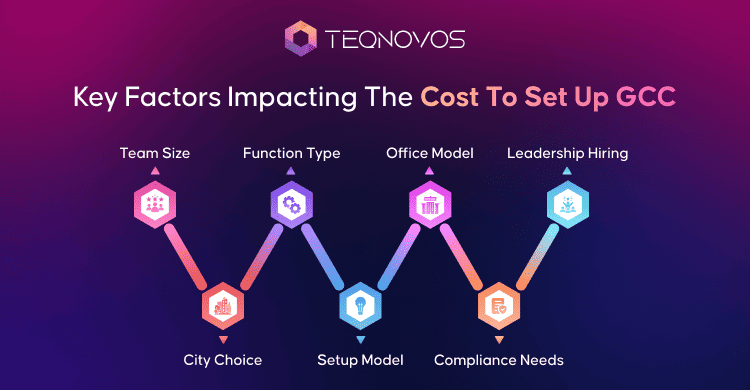
Key Factors Impacting The Cost To Set Up GCC
The cost of a GCC does not stay the same for every business. It changes with the structural goals and pace of growth. A clear view of these factors helps leaders plan the budget with confidence. It also helps them avoid cost gaps that appear later.
Team Size
Team size has a direct impact on cost. A smaller team needs less spending in the early stage. A larger team raises salary support and infrastructure needs. This is one of the main reasons why GCC costs in India vary widely.
City Choice
The city changes hiring costs and operating costs. Some cities offer deeper talent pools. Some offer lower real estate and support costs. The right location should match the business need and not only the budget target.
Function Type
The type of work inside the GCC also shapes the budget. Product engineering data work and leadership roles often need higher investment. Support functions may need a different cost structure. This is why a global capability center cost in India depends on what the center will actually do.
Setup Model
The setup model changes the starting cost. A fully owned model may need more investment in the early stage. A partner-led route may lower the initial burden. The right model depends on how much control the business wants from day one.
Office Model
The office model also affects the budget. A complete office setup needs more spending on space systems and daily operations. A flexible model may reduce that pressure in the early phase. This choice should support the team’s needs and growth plans.
Compliance Needs
Legal support adds another cost layer to the platform. Payroll standards with security controls and policy management all need planning. These costs may look smaller at first, but they become important as the center grows.
Leadership Hiring
Leadership hiring often changes the cost structure faster than expected. Strong local leaders bring experience and market understanding. They also help the center grow with more clarity. That value matters, but it also needs the right budget from the start.
A business should not estimate GCC cost through salaries alone. Team size and leadership all shape the final number. A better budget starts with a better understanding of these factors.
Ready to plan your GCC in India? —Get your cost roadmap now.
Schedule a CallEnd-to-End Cost of Setting Up a Global Capability Center in India
A GCC needs early investment before operations begin. These costs appear during the launch stage. They shape the first budget and set the base for future growth. This is why the cost of setting up a GCC in India should be planned with care.
Legal Setup
The business needs a clear legal structure before launch. This stage may include entity formation and documentation. It may also involve local advisory support. A weak legal start creates delays later.
Hiring Setup
Hiring begins before the full team is in place. The business may spend on talent search and employer branding. Early recruitment support raises the first budget. It also affects how fast the center becomes active.
Office Setup
The workplace model changes the launch cost. A physical office needs space and utilities. A flexible model may reduce this pressure in the early stage. The choice should match the team plan and growth pace.
Tech Setup
Technology needs planning from day one. The center may need laptops, access to cloud tools, and communication systems. These costs are part of the setup stage and not the later stage. A better tech base helps the team start with fewer issues.
Security Setup
Security should be built into the launch plan. The business may need access controls and secure system policies. This becomes more important when the center handles product work or sensitive data. Early security planning supports smoother operations.
Support Costs
Some launch costs sit outside the core setup items. These may include consulting payroll support or local process support. They may look smaller at first. Still, they add meaningful cost during the early phase.
Budget Impact
One-time setup costs do not end with one item. They come from a legal planning hiring office that needs technology readiness and launch support. A business that understands these areas can estimate the budget with more clarity. That leads to a stronger start and fewer surprises.
Recurring Operating Costs of a GCC in India
Launching a GCC is only the first stage. The higher cost appears after the center begins daily operations. These recurring expenses shape the yearly budget and influence how well the center grows. A clear view of ongoing costs helps businesses plan with more control and fewer surprises.
Talent Costs
Talent cost often takes the biggest share of the budget. This includes salaries and role-based support. The amount changes with team size and leadership depth. A center with more senior roles will carry a higher operating cost.
Office Costs
The workplace model also affects recurring spend. A full office setup brings rent and other utilities support. A flexible model may lower some of that pressure. The right choice depends on how the team works and how quickly the business plans to grow.
Technology Costs
Technology remains an ongoing business expense. The center may need software licenses c and system support throughout the year. These costs continue as the team expands and the work becomes more advanced.
Compliance Costs
A GCC also needs regular support for payroll and internal controls. These costs may seem smaller in the beginning. Still, they remain part of the annual budget and become more important as the center grows.
Retention Costs
Retention also adds to operating costs. Businesses often invest in learning programs and internal development to keep strong talent in place. A stable team supports better continuity and lowers the cost of repeated hiring.
Growth Costs
Operating cost changes again when the center expands. New managers and stronger support functions increase spending. That is why businesses should plan for growth and not only for current operations.
Budget Clarity
Recurring operating costs include workplace technology, compliance retention, and expansion needs. These expenses define the financial reality of the model. A business that plans them early manages scale with better visibility and stronger control.
Launch your GCC in India with confidence —Get your cost plan today.
Schedule a CallHow GCC Model Choice Impacts Costs?
GCC cost also depends on the model a business chooses. Some models need higher spending at the start. Some spread the cost over time. Some offer more control in the long run. The right choice depends on budget and operating goals.
Captive Model
A captive model usually needs a higher initial investment. The business sets up the entity and builds the structure on its own. This raises the early setup cost. It also gives stronger ownership and direct control over operations.
BOT Model
The build-operate-transfer model starts with partner support. This reduces the setup burden in the early stage. The partner helps launch the center and manage operations for a defined period. The cost may feel lighter at first, but the business should also plan for the transfer stage later.
Partner Led
A partner-led launch helps businesses enter faster without building everything on their own from day one. This model may lower internal effort during the launch period. It can also reduce early hiring and setup pressure. The cost will depend on the partner structure and service scope.
Hybrid Model
A hybrid model combines direct ownership with partner support. This gives the business more flexibility during the early phase. It can balance cost control with faster execution. This model often works well for companies that want to test the market before moving into a larger structure.
Cost Impact
Each model changes how the budget is distributed. A captive route may cost more at launch. A bot- or partner-led path may reduce early pressure. A hybrid model may create a more balanced cost structure. That is why model choice plays a major role in GCC planning.
How Cost Changes by City Type in India
City type shapes GCC spending in a very different way. It affects market pressure and future expansion room. This makes location a budget decision and not only an operating choice.
Tier 1 Cities
Tier 1 cities often suit businesses that need specialized talent and faster scale. They also offer stronger access to experienced leaders and service partners. That advantage raises spending because competition is higher and pressure is stronger.
Tier 2 Cities
Tier 2 cities support a more measured entry. They often help reduce facility expenses and ease early budget pressure. This works well for businesses that want to begin with a focused team and grow in phases.
Hiring Pressure
The difference is not only about salary. Larger city markets usually move faster and attract more employers. This push offers an upward trend and makes retention harder. Smaller city markets may bring less pressure, but they may need a more selective hiring plan.
Expansion Room
Some businesses need quick scale in the first stage. Others want stable growth over time. Tier 1 cities often support rapid expansion. Tier 2 cities may fit businesses that want more runway before they widen the team.
Market Fit
City type should match the purpose of the GCC. A business that needs niche talent and senior leadership may lean toward Tier 1 cities. A business that wants a steady launch with better budget control may prefer Tier 2 cities.
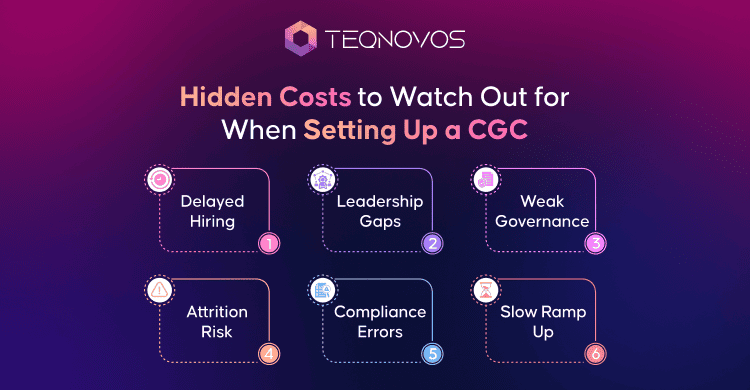
Hidden Costs to Watch Out for When Setting Up a GCC
Many businesses plan for salary, space, and tools. They miss the cost that builds quietly in the background. These gaps do not always appear in the first budget. Still, they affect timelines and output value.
Delayed Hiring
Hiring delays push the full launch plan off track. Key roles may stay open for weeks or months. This slows delivery and puts pressure on the team that is already in place. It also increases recruitment spend over time.
Leadership Gaps
A GCC needs strong local leaders early. Without them, teams may lack direction, and decisions may move slowly. This creates confusion across functions and affects business alignment. The cost appears through lost time and slower growth.
Weak Governance
Weak governance leads to poor visibility and unclear ownership. Teams may duplicate work or wait too long for decisions. This reduces efficiency and affects performance. It also creates risk as the center grows.
Attrition Risk
Attrition adds cost in ways that many businesses do not plan for. It led to repeated hiring and lower team continuity. A high exit rate also affects morale and reduces delivery strength.
Compliance Errors
Compliance mistakes raise costs very quickly. Problems in payroll or data controls create delays and extra support needs. These issues may also affect trust across regions.
Slow Ramp Up
Some teams take longer to become productive than expected. This may happen due to weak onboarding or limited support. The center may look active on paper, but it still takes time to deliver real output. That gap affects the return on investment.
Hidden costs often come from delay and avoidable gaps. A stronger plan helps businesses spot these issues early. That gives the GCC a better chance to grow with control and stability.
Strategic Approach to Estimating GCC Costs for Your Business
A GCC budget should start with business needs and not rough assumptions. A simple cost framework helps leaders plan with clarity. It also shows where the real spend will come from before the center goes live.
Define Functions
The first step is to decide what the GCC will handle. A center built for engineering will not carry the same cost as one built for finance support or data work. The function mixes shapes, hiring needs, and leadership depth.
Set Team Size
The next step is to define the starting team size. A lean team will need a smaller budget in the first stage. A larger team will raise talent cost and operating spend. This choice sets the base for the full estimate and drives innovation from a centralized hub.
Choose City
City type affects the budget in a direct way. Tier 1 locations may raise costs due to higher market pressure. Tier 2 locations may offer a more controlled budget. The right choice depends on the kind of team the business wants to build.
Choose Model
The GCC model also changes the cost path. A captive route may need stronger early investment. A partner, or hybrid model, may spread the cost in a different way. The model should match the level of ownership and speed the business wants.
Estimate Setup Cost
The business should then map the setup cost. This may include a legal setup to hire developers and launch tools. Businesses also need to consider workplace readiness and security planning to stay a step ahead. This gives a clearer picture of the budget needed before operations begin.
Estimate Run Cost
The next step is to project the yearly cost of running the center. This includes talent expense and workplace cost. They also need to consider technology spend and retention efforts. A stronger estimate looks at the first year and not only the launch stage.
Map Value
Cost should always be matched with expected value. The business should ask what the GCC will improve over time. That may include stronger control or better capability. This step helps leaders judge if the budget supports the larger business goal.
Planning View
A good estimate does not come from one number alone. It comes from the function team size and expected value. When these pieces are mapped early, the business makes better GCC decisions with less risk.
Get Started with Teqnovos
The cost to set up a GCC in India is not just a hiring expense. It is a structured business investment. The right budget supports scale control and long-term value. A stronger plan helps the business launch with clarity and grow with confidence.
Connect with Teqnovos to manage your ongoing costs and focus on your business effectively. Set up your GCC in India with us. We are a global capability center set up company offering services to establish your business. Book a free consultation call with us today!