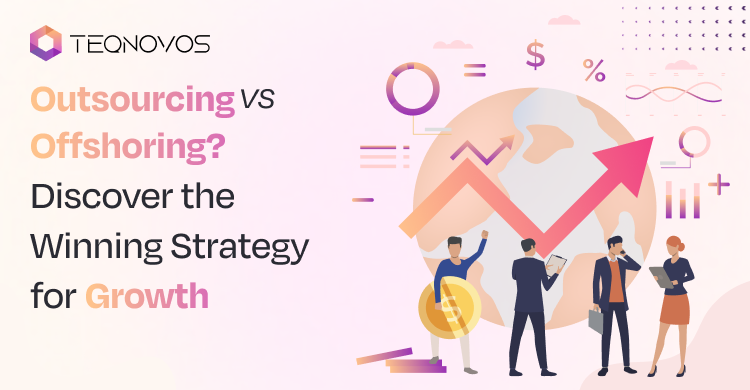
Outsourcing vs Offshoring? Discover the Winning Strategy for Growth
The global market is not just a place to grow and evolve. It is about growing smarter and leveraging the right resources. Businesses could extend their capabilities and optimize operations while increasing efficiency.
Enter the most common approaches for businesses to scale: outsourcing and offshore development services.
Both are extensively used by businesses. They help streamline operations, approach talent, and increase revenue. But despite their resemblance, these two strategies are quite diverse from each other. Before selecting the approach to move on with, it is essential to know its key differences.
So, which method is the winning one for your company’s growth? Let’s review the details and uncover the path that leads to a successful outcome. Get faster and more eco-friendly expansion with these strategies.
Keep reading to gain insight!
What is Outsourcing?
Outsourcing is a method in which a companies recruit an external service vendor. These vendors handle certain tasks, processes, or services. These tasks were earlier supervised by the internal development team. This way, the in-house team can relax and focus on other essentials for business.
This approach helps save time, lower costs, and provide professionals. Businesses do not need to build a different department; they could outsource one.
Common examples include:
- Customer support and call centers
- IT services and software development
- Payroll and accounting
- Marketing and content creation
Business Benefits Of Outsourcing
Cost Efficiency:
Outsourcing companies help avoid the unnecessary expense of hiring full-time employees. Save overhead costs on office space, tools, and training.
Access Expertise:
Leverage professionals in different technologies. Businesses could get access to talent without any large investment.
Scalability:
Looking to recruit talented developers in the middle of the project? With outsourcing, hire developers or relieve them based on the seasonal project needs.
Focus On Core Business:
While the outsourced team handles the technical needs, the in-house team can focus on handling other project matters. Innovate new products and services, leading to growth.
Challenges Faced In Outsourcing
Reduced Direct Control:
Losing complete authority of the project may lead to failing quality. Difficulties with the team functioning or within the project could increase.
Communication Barriers:
Deviations in time frames and language could lead to project failure. Cultural gaps, too, could cause misunderstanding among the team.
Data Security Risks:
Sensitive user information needs to be overlooked. There needs to be strict contracts or security measures to safeguard the data.
Hidden Costs:
Unexpected disbursement could rise with the change in the contract. Outsourcing companies could charge for any extra services.
When handled competently, outsourcing could be a robust business approach. It could boost business and enhance its capabilities.
Stay ahead in the global market — explore outsourcing and offshoring strategies now.
Schedule a CallWhat is Offshoring?
Offshoring is the practice of relocating project tasks. Businesses could allocate their specific task or the complete operations to another country. They usually do this to take advantage of low costs, skills, or favorable conditions.
Unlike outsourcing, which includes a third-party service provider. Offshoring may involve setting up a company brand abroad. Businesses could partner with foreign providers for business activities.
Business Benefits Of Offshoring
Cost Savings:
Get a significant reduction in labor costs. Reduced business operational overhead.
Access Global Talent:
Tap into skilled talent developers. Hire technical developers with an expert tech stack who are tough to locate.
24/7 Operations:
The difference in time zones helps businesses to continue project tasks without any break. When the in-house team is not available, the outsourced team works.
Market Expansion:
Establish business presence abroad. Open doors to build a new customer base. Get products and services globally and tap into local market opportunities.
Focus on Core Activities:
Offloading routine activities unloads the in-house team’s burden. Thus, they could emphasize business tactics and growth.
Learn how an offshore software development company can become a key to your global success. And how to tackle the demand with it.
Challenges Faced In Offshoring
Cultural and Language Differences:
There could be a rise in errors due to different communication styles. Different operating environments could lead to inconsistencies among the teams.
Time Zone Barriers:
Coordination may become an issue with teams operating in different zones.
Quality Control Issues:
Handling products and services requires robust oversight.
Political and Economic Risks:
If the laws are changing, it could lead to varying economic stability. Thus, influences various operations.
Data Security Concerns:
Moving confidential user data across borders needs strict rules and regulations. Thus, protecting the data.
Clear strategies and planning in offshore services could help businesses. They could improve their proficiency and their mark in the international market.
Key Differences Between Outsourcing and Offshoring

- Definition
Outsourcing: Businesses could get external firms to handle business tasks or services.
Offshoring: Moving project tasks or production to another country.
- Location
Outsourcing: It could be local, nearshore, or overseas.
Offshoring: Always involves a foreign location.
- Ownership
Outsourcing: An outside provider helps with the tasks. The business does not own the facility.
Offshoring: The company may own and handle the overseas facility or hire a local provider.
- Purpose
Outsourcing: Gain skill, reduce expenses, or improve efficiency.
Offshoring: Low operational price, access to global professionals. Get a chance to enter new markets.
- Scope
Outsourcing: Any function—services, manufacturing, or projects.
Offshoring: Primarily manufacturing or service delivery.
- Control
Outsourcing: Reduced direct command; managed by the outside partner.
Offshoring: More control if the facility is company-owned.
Grow smarter — discover outsourcing and offshore development solutions today.
Schedule a CallHow to Choose: Outsourcing vs Offshoring?
Choosing between offshoring and outsourcing services relies on the business requirements. Start by locating the main business challenge. If a project demands expert talent for a small task, best to choose outsourcing. With this approach, businesses could get access to experts. It does not involve any long-term commitments with the developers.
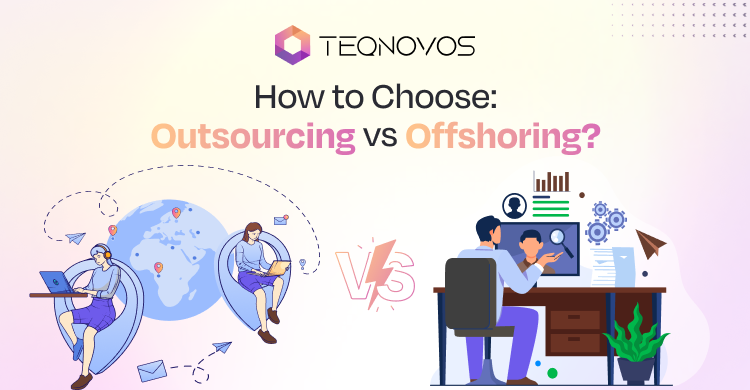
If the goal is to cut costs and expand in the global market. Offshoring might be a smarter move to grow. Setting up business operations abroad helps access a wide skills. It also opens up new market opportunities. Businesses could run processes around the clock as a time zone advantage.
Control is another big factor. With outsourcing, businesses have the versatility but less supervision. With offshoring, businesses could have more control if they own the facility. Though owning a facility or hiring a trusted local partner both require more initial investment.
Think about scalability, too. Offshoring allows for managing the demand for developers easily. It is a better method if a business needs long-term scaling and delivery.
In the end, select the right strategy that aligns with the business vision. Consider cost, expertise, and growth as main pointers. Many companies even combine both these models. Thus, maximizing efficiency and reach.
Conclusion
Outsourcing and offshoring both open doors to efficiency and growth. The only difference lies in how much control a business wants.
Outsourcing works best when businesses need expert guidance and flexibility in resources. But offshore development services are ideal for focusing on extended project demands.
There is no winning strategy. Winning and losing depend on the scope, resources, and vision for growth. Some businesses even blend and use the hybrid model. Thus, creating a perfect balance to use both approaches.
Collaborate with Teqnovos and extend your business capabilities. Get services for a more sustainable success. Connect with us today!